Showing posts with label 312-38. Show all posts

Friday, 31 July 2026

What Top Defenders Use for 312-38 Study Guide Success

A network security professional examining a holographic display showing a complex network defense architecture and the 'Mastering 312-38: Defender's Strategic Guide' title, symbolizing strategic study for the EC-Council CND v3 certification.

In an era where cyber threats evolve with unprecedented speed and sophistication, the role of a proficient network defender has never been more critical. Organizations worldwide are seeking highly skilled professionals capable of fortifying their digital perimeters, detecting intrusions, and responding effectively to security incidents. This demand underscores the immense value of certifications like the EC-Council Certified Network Defender (CND) v3, a credential that validates a professional's ability to protect, detect, and respond to network security challenges.

Achieving the EC-Council CND v3 certification signifies a deep understanding of network security fundamentals and advanced defense strategies. For aspiring and current cybersecurity professionals looking to elevate their expertise, a robust 312-38 study guide is not just a recommendation; it's a necessity. This article delves into what top defenders leverage to ensure success in the challenging 312-38 exam, providing a comprehensive roadmap for your certification journey.

Understanding the EC-Council Certified Network Defender (CND) v3 Certification

The EC-Council Certified Network Defender (CND) v3 is a vendor-neutral, hands-on, and lab-intensive certification program designed to help network administrators, engineers, and anyone involved in network operations to protect, detect, and respond to network security threats. Unlike certifications that focus solely on offensive security, the CND v3 program is meticulously crafted to empower individuals with the knowledge and skills required to proactively defend networks against a myriad of cyberattacks.

This certification is tailored for individuals who are directly responsible for network security operations. It covers essential security concepts, defensive strategies, and practical application of security tools and techniques. The CND v3 program aims to equip professionals with the ability to analyze and identify security threats, implement security controls, and manage network security policies effectively. It bridges the gap between theoretical knowledge and practical application, ensuring certified individuals are job-ready and capable of making immediate contributions to their organization's security posture.

The Importance of CND v3 in Today's Cyber Landscape

The digital transformation has introduced new vulnerabilities and expanded the attack surface for organizations. From sophisticated ransomware attacks to advanced persistent threats (APTs), the adversaries are constantly innovating. In this high-stakes environment, the CND v3 certification stands out by focusing on a proactive, defensive approach. It provides a structured learning path that covers modern threats and the defenses against them, ensuring that certified professionals are not just reactive but also capable of anticipating and mitigating risks.

Earning your CND v3 demonstrates a commitment to excellence in network security. It tells employers that you possess a globally recognized set of skills crucial for safeguarding critical infrastructure and sensitive data. This certification can significantly enhance career prospects, opening doors to advanced roles such as Network Security Engineer, Security Administrator, or even a Security Analyst. The demand for such skilled professionals continues to outstrip supply, making the CND v3 a highly valuable asset in any cybersecurity career.

Furthermore, the CND v3 curriculum is regularly updated to reflect the latest trends and technologies in network security. This ensures that the knowledge and skills gained are current and relevant to the challenges faced by organizations today. Whether it's securing cloud environments, IoT devices, or implementing advanced data protection measures, the CND v3 covers a broad spectrum of topics essential for comprehensive network defense.

Navigating the 312-38 Exam: Your Blueprint for Success

The EC-Council 312-38 exam, officially known as the EC-Council Certified Network Defender (CND), is the gateway to obtaining your CND v3 certification. Understanding the exam's structure, format, and content is the first critical step in developing an effective 312-38 study guide. This exam is designed to rigorously test a candidate's understanding of network defense principles and their practical application.

Here are the core details of the 312-38 exam:

  • Exam Name: EC-Council Certified Network Defender (CND)
  • Exam Code: 312-38
  • Exam Price: $550 (USD)
  • Duration: 240 minutes
  • Number of Questions: 100
  • Passing Score: 70%

The exam is comprised of multiple-choice questions, some of which may be scenario-based, requiring candidates to apply their knowledge to real-world situations. The 240-minute duration allows ample time to read and analyze each question carefully, making it crucial to manage your time effectively during the exam. A passing score of 70% means you need to correctly answer at least 70 out of 100 questions, emphasizing the need for thorough preparation across all syllabus domains.

For those looking for an excellent resource to test their knowledge and become familiar with the exam format, exploring sample questions can be incredibly beneficial. You can find valuable EC-Council Certified Network Defender sample questions to gauge your readiness and identify areas that require further study.

Deconstructing the EC-Council 312-38 Exam Syllabus

The comprehensive nature of the EC-Council Certified Network Defender exam syllabus is what makes the CND v3 so valuable. It covers a broad range of topics essential for a holistic understanding of network security. A strong EC-Council CND v3 study guide must address each of these areas in depth.

Network Attacks and Defense Strategies

This foundational module introduces candidates to the various types of network attacks, including reconnaissance, scanning, enumeration, vulnerability exploitation, and denial-of-service attacks. It also delves into the corresponding defense strategies, such as intrusion detection systems (IDS), intrusion prevention systems (IPS), firewalls, and security information and event management (SIEM) solutions. Understanding the attacker's mindset is crucial for effective defense, and this section provides that perspective. It also covers the phases of an attack and how to implement countermeasures at each stage.

Administrative Network Security

Administrative security focuses on the policies, procedures, and guidelines that govern network access and usage. This includes topics like security policy development, risk management frameworks, compliance requirements (e.g., GDPR, HIPAA), and security awareness training. Candidates will learn how to establish a strong security posture through effective administrative controls, ensuring that human elements within an organization adhere to best practices. This section emphasizes the non-technical aspects that are equally vital for overall security.

Technical Network Security

This domain covers the technical controls used to secure networks. It includes detailed discussions on firewall configurations, router and switch security, virtual private networks (VPNs), network segmentation, and secure network protocols (e.g., HTTPS, SSH). Candidates will gain practical knowledge of implementing and managing these technical safeguards to protect network infrastructure from unauthorized access and malicious activities. Understanding the intricacies of these technologies is key to designing and maintaining a secure network.

Network Perimeter Security

The network perimeter is the first line of defense against external threats. This section focuses on securing this critical boundary through technologies like demilitarized zones (DMZs), proxy servers, intrusion detection and prevention systems, and advanced firewall rulesets. It teaches how to design a robust perimeter defense that can filter malicious traffic while allowing legitimate access. Strategies for thwarting external attacks before they penetrate the internal network are a primary focus here.

Endpoint Security - Windows Systems

Windows systems are ubiquitous in enterprise environments and are frequent targets for attackers. This module covers securing Windows endpoints, including topics like patch management, antivirus and anti-malware solutions, host-based firewalls, system hardening techniques, and user account control. It delves into securing critical Windows services, understanding common vulnerabilities, and implementing best practices for maintaining the integrity and confidentiality of data on Windows machines.

Endpoint Security - Linux Systems

Linux systems are widely used in servers, critical infrastructure, and specialized environments. This section explores securing Linux endpoints, covering topics such as user and group management, file permissions, secure shell (SSH) configurations, kernel hardening, package management for security updates, and monitoring Linux system logs. Candidates will learn how to protect Linux machines from various attacks and maintain their security posture in a production environment.

Endpoint Security - Mobile Devices

With the proliferation of smartphones and tablets, mobile device security has become paramount. This domain addresses the unique challenges of securing mobile endpoints, including mobile device management (MDM) solutions, application security for mobile apps, securing Wi-Fi connections, data encryption on mobile devices, and responding to mobile-specific threats. It emphasizes safeguarding sensitive data and organizational resources accessed via mobile devices.

Endpoint Security - IoT Devices

The Internet of Things (IoT) brings significant convenience but also a new frontier of security risks. This module focuses on the specific security considerations for IoT devices, which often have limited processing power and unique communication protocols. Topics include secure boot, firmware security, network segmentation for IoT devices, authentication mechanisms, and managing vulnerabilities in an interconnected IoT ecosystem. Protecting these devices from compromise is crucial for preventing them from becoming entry points into the larger network.

Administrative Application Security

Application security extends beyond network infrastructure. This section covers administrative aspects of securing applications, including secure development lifecycles (SDLC), vulnerability assessments, penetration testing of applications, and secure coding practices. It emphasizes the importance of integrating security throughout the application development process to minimize vulnerabilities before deployment and manage them effectively post-release.

Data Security

Data is often the primary target of cyberattacks. This domain focuses on protecting sensitive data throughout its lifecycle – at rest, in transit, and in use. Topics include data classification, encryption techniques (symmetric and asymmetric), data loss prevention (DLP) strategies, data masking, and secure data storage solutions. Understanding how to implement robust data security measures is critical for compliance and protecting an organization's most valuable assets.

Enterprise Virtual Network Security

Virtualization introduces unique security challenges and opportunities. This module covers securing virtualized environments, including virtual machines (VMs), hypervisor security, virtual network segmentation, and managing security in a software-defined networking (SDN) context. Candidates will learn how to apply traditional security principles to virtualized infrastructures and understand the specific threats and defenses relevant to these environments.

Enterprise Cloud Security

Cloud computing has revolutionized IT infrastructure, but it also presents new security paradigms. This section focuses on securing cloud environments (IaaS, PaaS, SaaS), including cloud security models, shared responsibility, identity and access management (IAM) in the cloud, data encryption in cloud storage, and compliance in cloud deployments. It provides insights into securing services and data hosted on major cloud platforms.

Enterprise Wireless Network Security

Wireless networks are convenient but inherently vulnerable. This module addresses securing enterprise wireless networks, covering topics like Wi-Fi security protocols (WPA2, WPA3), rogue access point detection, wireless intrusion prevention systems (WIPS), and secure wireless network design. It emphasizes protecting wireless communications from eavesdropping, unauthorized access, and other common wireless attacks.

Network Traffic Monitoring and Analysis

Effective network defense relies on vigilance. This domain covers the tools and techniques for monitoring network traffic to detect anomalies, suspicious activities, and potential intrusions. Topics include packet sniffing, traffic analysis, using network protocol analyzers, and understanding common network attacks by analyzing their traffic signatures. The ability to interpret network flow data is crucial for early detection of threats.

Network Logs Monitoring and Analysis

Logs are invaluable forensic artifacts and indicators of compromise. This section focuses on collecting, aggregating, and analyzing network and system logs to identify security incidents. It covers log management solutions, SIEM systems, correlation of events, and forensic analysis of log data. Understanding how to extract meaningful security intelligence from vast amounts of log data is a core skill for any network defender.

Incident Response and Forensics Investigation

Despite best efforts, incidents will occur. This module covers the critical phases of incident response – preparation, identification, containment, eradication, recovery, and lessons learned. It also introduces digital forensics principles, including data collection, preservation, analysis, and reporting. Candidates will learn how to effectively respond to security breaches and conduct basic forensic investigations to determine the root cause and impact of an attack.

For deeper insights into effectively validating your skills in network defense, consider exploring resources on what nobody tells you about CND network security. Such perspectives can offer unique preparation angles.

Business Continuity and Disaster Recovery

Resilience is key in cybersecurity. This domain focuses on ensuring business operations can continue despite disruptive events. Topics include developing business continuity plans (BCP), disaster recovery plans (DRP), backup and restoration strategies, and implementing redundant systems. It emphasizes minimizing downtime and data loss in the event of a major security incident or natural disaster.

Risk Anticipation with Risk Management

Proactive security starts with understanding and managing risks. This module covers the principles of risk management, including risk identification, assessment, analysis, and mitigation strategies. Candidates will learn how to identify potential threats and vulnerabilities, evaluate their impact and likelihood, and implement controls to bring risks to an acceptable level. This systematic approach is fundamental to building a strong security program.

Threat Assessment with Attack Surface Analysis

Understanding an organization's attack surface is crucial for defense. This section covers techniques for identifying and analyzing potential entry points for attackers. Topics include asset inventory, vulnerability scanning, penetration testing, and understanding common attack vectors. By systematically analyzing the attack surface, defenders can prioritize security efforts and reduce the likelihood of successful attacks.

Threat Prediction With Cyber Threat Intelligence

Staying ahead of attackers requires intelligence. This domain focuses on leveraging cyber threat intelligence (CTI) to predict and prevent future attacks. It covers sources of threat intelligence, intelligence analysis frameworks, indicators of compromise (IOCs), and integrating threat intelligence into security operations. Candidates will learn how to use CTI to gain insights into emerging threats and proactively adjust their defenses.

Crafting Your Ultimate 312-38 Study Guide Strategy

With such a broad and deep syllabus, a well-structured 312-38 study guide is indispensable. Success hinges not just on raw knowledge but on a strategic approach to learning and retention. Here's how top defenders typically prepare:

1. Official Training & Courseware

The foundation of any successful EC-Council certification journey begins with official resources. The EC-Council CND v3 Courseware is specifically designed to cover all exam objectives. It provides comprehensive learning material, including theoretical concepts, practical exercises, and case studies that align directly with the 312-38 exam. Enrolling in an official CND v3 training course, either instructor-led or self-paced, offers a structured learning environment and access to experienced trainers who can clarify complex topics. This is often the most effective method for understanding the nuances of the exam syllabus.

2. Practice Questions & Mock Exams

One of the most effective components of any EC-Council CND v3 study guide is extensive practice with exam-style questions. Utilizing EC-Council Certified Network Defender practice questions and taking full-length mock exams simulates the actual exam experience, helping you to:

  • Identify areas where your knowledge is weak.
  • Familiarize yourself with the question format and typical phrasing.
  • Improve time management skills under pressure.
  • Reduce exam day anxiety.

Look for practice tests that provide detailed explanations for both correct and incorrect answers, allowing you to learn from your mistakes. The more you practice, the more confident you will become in your ability to tackle diverse questions.

3. Hands-on Labs and Practical Application

The CND v3 is designed to be a practical, skill-validating certification. Therefore, theoretical knowledge alone is not enough. Your 312-38 exam prep material should absolutely include hands-on labs. EC-Council provides extensive labs as part of its official training, allowing you to:

  • Configure firewalls and network devices.
  • Perform traffic analysis using tools like Wireshark.
  • Implement security controls on Windows and Linux endpoints.
  • Practice incident response procedures.

These practical exercises reinforce theoretical concepts and build the muscle memory required to perform tasks effectively in a real-world environment. Experience is key to answering scenario-based questions accurately.

4. Time Management and Study Schedule

Given the breadth of the 312-38 syllabus, effective time management is paramount. Develop a realistic study schedule that allocates sufficient time for each domain, with extra emphasis on areas where you feel less confident. Break down your study goals into manageable chunks and stick to your schedule. Regular, consistent study sessions are more effective than cramming before the exam. Prioritize understanding over memorization, and allocate time for review and practice.

5. Leveraging Supplementary Resources

While official courseware is primary, supplementing your Certified Network Defender v3 training course with additional resources can deepen your understanding. This might include:

  • **Industry Blogs and Forums:** Stay updated on the latest threats and defense techniques.
  • **Books and Whitepapers:** Delve deeper into specific topics that you find challenging.
  • **Government Publications:** Organizations like NIST (National Institute of Standards and Technology) offer invaluable guidelines on cybersecurity best practices that align with CND objectives.
  • **Video Tutorials:** Visual learning can be highly effective for complex technical concepts.

Ensure that any supplementary material aligns with the EC-Council CND v3 exam objectives to avoid diverting your focus. Many professionals also benefit from a variety of study resources for EC-Council certifications.

Leveraging Key Resources for Your 312-38 Exam Prep Material

To ensure a comprehensive preparation, knowing where to find reliable and effective EC-Council 312-38 study material is crucial. Here's a breakdown of essential resources:

Official EC-Council Resources

The EC-Council itself provides a wealth of information and tools tailored for the CND v3 exam. The official EC-Council Certified Network Defender (CND) page is your go-to for the most accurate and up-to-date information on the certification, including its benefits, target audience, and exam details. This page also often highlights changes to the exam objectives or syllabus.

Scheduling Your 312-38 Exam

Once you are confident in your preparation, scheduling the exam is the next step. EC-Council exams are primarily administered through two prominent testing centers:

  • Pearson VUE: A global leader in computer-based testing, offering convenient locations worldwide.
  • ECC Exam Center: EC-Council's own online proctoring platform, allowing you to take the exam from the comfort of your home or office.

Choosing between these options depends on your preference for a physical testing center experience or an online proctored environment. Both offer secure and reliable exam delivery.

Additional Study Material and Practice

Beyond official courseware, many find value in a variety of resources. For practical exercises and additional learning content, the official training often includes access to labs that are instrumental in solidifying theoretical knowledge. For those seeking alternative testing options or more information on proctored exams, Prometric also offers EC-Council certification exams. You can learn more about scheduling through Prometric if that is your preferred testing partner.

Remember, the goal of your EC-Council Certified Network Defender exam review is not just to pass the exam, but to truly master the skills required to be an effective network defender. This holistic approach will ensure long-term career success.

What to Expect on Exam Day for 312-38

Exam day can be stressful, but knowing what to expect can significantly ease anxiety. The 312-38 exam is a proctored, computer-based test consisting of 100 multiple-choice questions over 240 minutes. This gives you approximately 2 minutes and 24 seconds per question, which is ample time if you are well-prepared and manage your pace.

  • Arrival: If taking it at a test center, arrive at least 15-30 minutes early to complete check-in procedures. For online proctored exams, ensure your environment and equipment meet the requirements well in advance.
  • Identification: You will need to present valid, government-issued photo identification.
  • Environment: Test centers provide a quiet, distraction-free environment. For online exams, ensure your personal space is free from interruptions and that your camera and microphone are working correctly for proctoring.
  • Question Format: Expect a mix of direct knowledge recall questions, scenario-based questions that require analytical skills, and questions that test your understanding of tools and techniques.
  • Review: You can mark questions for review and go back to them before submitting the exam. Utilize this feature wisely for challenging questions, ensuring you don't get stuck on one item for too long.

Maintain a steady pace, read each question carefully, and eliminate obviously incorrect answers to improve your chances of selecting the right one. Trust in your 312-38 certification preparation guide and the extensive effort you've put in.

Certification Cost and Renewal: Investing in Your Future

The EC-Council Certified Network Defender certification cost for the 312-38 exam is $550 (USD). This fee covers the cost of taking the exam itself. However, it's important to factor in additional expenses such as official training, courseware, and practice exams, which are critical for effective preparation. While this might seem like a significant investment, the CND v3 certification offers a high return in terms of career advancement, increased earning potential, and enhanced credibility in the cybersecurity domain.

EC-Council certifications typically require renewal every three years. To maintain your CND v3 credential, you must earn 120 Continuing Professional Education (CPE) credits within the three-year cycle. These credits can be acquired through various activities, including:

  • Attending cybersecurity conferences and webinars.
  • Publishing relevant articles or research.
  • Teaching or mentoring in cybersecurity.
  • Completing additional EC-Council or other industry-recognized certifications.
  • Participating in professional cybersecurity associations.

This renewal process ensures that certified professionals remain current with the latest cybersecurity trends, technologies, and best practices, reinforcing the long-term value and relevance of the CND v3 certification. Staying active in the cybersecurity community and continuously learning are integral parts of maintaining this prestigious credential.

Beyond Certification: Applying Your CND v3 Knowledge

Earning the EC-Council CND v3 certification is a significant achievement, but the real value lies in applying the acquired knowledge and skills in real-world scenarios. The comprehensive curriculum ensures that certified professionals are well-equipped to contribute immediately to an organization's network defense capabilities. Here's how your CND v3 knowledge translates into practical impact:

  • Proactive Defense: You'll be able to design and implement robust network security architectures, using firewalls, IDS/IPS, VPNs, and secure protocols to prevent attacks before they happen.
  • Threat Detection: Your skills in network traffic and log analysis will enable you to monitor systems effectively, identify suspicious activities, and detect intrusions early, minimizing potential damage.
  • Incident Response: In the event of a breach, you'll be able to follow established incident response frameworks, contain the threat, eradicate malware, recover affected systems, and conduct initial forensic investigations.
  • Endpoint Security: You'll be proficient in securing various endpoints, including Windows, Linux, mobile, and IoT devices, addressing their unique vulnerabilities and implementing appropriate controls.
  • Cloud and Virtualization Security: You will understand how to apply security principles to modern cloud environments and virtualized infrastructure, ensuring that these complex systems are adequately protected.
  • Policy and Compliance: Your understanding of administrative security will allow you to contribute to the development and enforcement of security policies, ensuring regulatory compliance and fostering a security-aware culture within your organization.

The CND v3 certification is not merely a piece of paper; it's a testament to your capability to be a frontline defender in the ongoing battle against cyber threats. It signifies your readiness to protect valuable assets and maintain the integrity of critical network infrastructures.

Frequently Asked Questions About the 312-38 Study Guide and CND v3

1. What is the best study guide for EC-Council CND?

The official EC-Council CND v3 Courseware is universally regarded as the most authoritative and comprehensive study guide. Supplementing this with hands-on labs, practice questions, and peer study groups can significantly enhance your preparation.

2. How long should I study for the EC-Council 312-38 exam?

The study duration varies based on your existing knowledge and experience. For individuals with some network and security background, 80-120 hours of dedicated study over 4-6 weeks is a common timeframe. Beginners may require more time, potentially 120-160 hours or more.

3. Are there free EC-Council CND v3 mock exam resources available?

While official EC-Council mock exams typically come with a cost or are bundled with training, you can find free sample questions and quizzes from various online platforms and communities. However, always prioritize official or reputable third-party resources for quality and accuracy in your EC-Council CND v3 mock exam preparation.

4. What kind of questions are on the 312-38 exam?

The 312-38 exam features multiple-choice questions, which may include direct recall of facts, scenario-based problems requiring application of knowledge, and questions testing understanding of specific tools or techniques. Some questions may involve analyzing diagrams or output snippets.

5. Does the EC-Council Certified Network Defender exam syllabus change frequently?

EC-Council regularly reviews and updates its certification syllabi to reflect the latest industry trends, technologies, and threat landscapes. While major overhauls are less frequent, minor adjustments to the EC-Council CND v3 latest exam topics can occur. Always refer to the official EC-Council website for the most current syllabus and exam objectives.

Conclusion

The journey to becoming an EC-Council Certified Network Defender (CND) v3 is a challenging yet profoundly rewarding endeavor. The 312-38 exam serves as a robust validation of your ability to implement, manage, and defend network infrastructures against sophisticated cyber threats. By meticulously following a well-structured 312-38 study guide, engaging with official EC-Council training, dedicating time to hands-on labs, and rigorously practicing with exam-style questions, you can confidently approach the certification exam.

Earning your CND v3 certification signifies not only your technical prowess but also your commitment to continuous learning in the dynamic field of cybersecurity. It elevates your professional profile, opens doors to advanced career opportunities, and establishes you as a credible network security expert capable of protecting organizational assets. Embrace this journey, leverage the extensive resources available, and prepare to join the ranks of top defenders. For further insights into maximizing your preparation and understanding the certification landscape, exploring how to best prepare for network security certifications can provide additional valuable perspectives.
Thursday, 11 June 2026

What Nobody Tells You About the CND Network Defender Exam

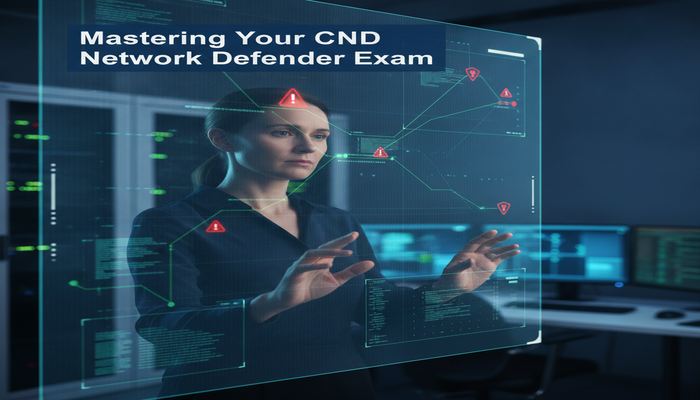
A cybersecurity professional in a SOC analyzing a complex holographic network map, showing clarity and understanding after deciphering a threat, with the title 'Mastering Your CND Network Defender Exam' overlaid.

Are you considering a career in network security? The digital landscape is constantly evolving, and with it, the threats that lurk within networks. As organizations increasingly rely on robust digital infrastructures, the demand for skilled network defenders has skyrocketed. This is where certifications like the EC-Council Certified Network Defender (CND) come into play, validating your expertise in protecting critical network assets. But what does it truly take to earn this credential?

Many aspiring cybersecurity professionals are curious about the CND network defender exam, wondering about its difficulty, the depth of topics covered, and the best way to prepare. This comprehensive guide will pull back the curtain, sharing insights that go beyond the official descriptions. We'll explore the EC-Council CND v3 exam syllabus, dive into what makes this certification stand out, and equip you with the knowledge to approach the 312-38 exam with confidence. Get ready to uncover the untold truths about becoming an EC-Council Certified Network Defender!

What is the EC-Council Certified Network Defender (CND) Certification?

The EC-Council Certified Network Defender (CND) is a comprehensive, vendor-neutral certification designed to train network administrators on how to protect, detect, and respond to network attacks. It's a hands-on, intensive program that focuses on creating resilient network infrastructures, implementing robust security policies, and proactively defending against emerging cyber threats. Unlike some certifications that might focus narrowly on a specific vendor's products, the CND covers a broad spectrum of network defense strategies applicable across various environments.

The CND v3, the latest version of this certification, emphasizes a practical, immersive approach, ensuring that certified professionals possess not just theoretical knowledge but also the tactical skills required to be effective network defenders. It's built on a job-task analysis approach, ensuring that the skills learned are directly applicable to real-world job roles in network security. This certification is a significant step for anyone looking to solidify their expertise in defending enterprise networks.

A Deep Dive into the CND Network Defender Exam (312-38)

Understanding the specifics of the CND network defender exam (code 312-38) is crucial for effective preparation. This section will break down all the vital details you need to know about the exam's structure, cost, and administration.

EC-Council Certified Network Defender Exam Overview

The EC-Council Certified Network Defender (CND) exam, officially known as the 312-38, is designed to test your proficiency across a wide range of network security domains. It validates your ability to design, implement, and maintain secure network infrastructures, making you an invaluable asset in any organization's defense strategy. The certification is part of EC-Council's renowned cybersecurity education framework, which aims to produce highly skilled professionals.

The exam focuses on the EC-Council CND v3 product version, ensuring candidates are assessed on the most current and relevant defense strategies and technologies. This makes the CND v3 a highly sought-after credential for those looking to stay ahead in the dynamic field of network security.

Key Exam Details

Here's a snapshot of the essential details for the EC-Council 312-38 CND exam:

  • Exam Name: EC-Council Certified Network Defender (CND)
  • Exam Code: 312-38
  • Vendor: EC-Council
  • Exam Product Version: v3
  • Exam Price: $550 (USD)
  • Duration: 240 minutes (4 hours)
  • Number of Questions: 100
  • Passing Score: 70%

The passing score of 70% for the EC-Council CND exam passing score indicates that a thorough understanding of all topics is necessary. You'll need to demonstrate competence across various network defense concepts to achieve this threshold. For a general understanding of the certification, including its syllabus, you can check out this resource: EC-Council CND v2 exam syllabus insights.

Certified Network Defender CND v3 Exam Format

The Certified Network Defender CND v3 exam format is primarily composed of multiple-choice questions. However, candidates should also be prepared for other interactive question types, such as drag-and-drop or scenario-based questions, which assess practical application of knowledge. These diverse question types are designed to comprehensively evaluate your understanding and decision-making abilities in real-world network defense scenarios. The 100 questions are carefully crafted to cover the breadth and depth of the EC-Council CND v3 exam syllabus, ensuring a robust assessment of your capabilities.

Unpacking the EC-Council CND v3 Exam Syllabus (312-38 Exam Topics)

The EC-Council CND v3 exam syllabus is extensive, covering a wide array of topics crucial for any network defender. Let's break down the key domains and what each entails, providing you with a clearer picture of the Certified Network Defender CND exam objectives.

Network Attacks and Defense Strategies

This section is foundational, exploring the various types of network attacks that modern organizations face. You'll delve into the methodologies of attackers, from reconnaissance and scanning to gaining access, maintaining access, and covering tracks. Crucially, it also covers the corresponding defense strategies, including preventative measures, detection mechanisms, and response tactics. Understanding attack vectors like DoS/DDoS, sniffing, spoofing, and session hijacking, alongside their countermeasures, is paramount for the CND network defender exam.

Administrative Network Security

Administrative network security focuses on the policies, procedures, and governance aspects of securing a network. This includes developing security policies, implementing risk management frameworks, ensuring compliance with legal and regulatory requirements, and establishing incident response plans. You'll learn about security awareness training for employees, physical security controls, and the importance of a comprehensive security posture that extends beyond technical implementations. This domain is critical for building a resilient security culture.

Technical Network Security

This domain covers the hands-on technical aspects of securing a network. It involves understanding and implementing security controls such as firewalls, Intrusion Detection Systems (IDS), Intrusion Prevention Systems (IPS), Virtual Private Networks (VPNs), and secure network protocols. You'll learn how to configure and manage these devices and services to protect network infrastructure from various threats. Deep knowledge of TCP/IP security, port security, and network segmentation is expected for the EC-Council 312-38 exam topics.

Network Perimeter Security

The network perimeter is the first line of defense against external threats. This section delves into securing the boundaries of an organization's network. Topics include implementing robust firewall rules, configuring demilitarized zones (DMZs), utilizing web application firewalls (WAFs), and setting up secure gateways. Understanding how to protect internet-facing services and applications from external attacks is a key objective, ensuring that only authorized traffic can enter the internal network.

Endpoint Security-Windows Systems

Endpoints, such as user workstations and servers, are frequent targets for attackers. This module focuses on securing Windows-based systems. It covers topics like hardening Windows operating systems, managing user accounts and privileges, implementing robust antivirus and anti-malware solutions, configuring Windows Firewall, and ensuring timely patching and updates. Knowledge of Group Policy Objects (GPOs) and Windows security logs is also essential for defending these common enterprise endpoints.

Endpoint Security-Linux Systems

Just as critical as Windows security, this domain focuses on securing Linux-based endpoints, which are prevalent in servers and specialized environments. It includes hardening Linux distributions, managing user and group permissions, configuring firewall rules (e.g., iptables, ufw), securing SSH access, and implementing intrusion detection for Linux systems. Understanding common Linux vulnerabilities and how to mitigate them is a core part of the EC-Council CND v3 exam syllabus.

Endpoint Security-Mobile Devices

With the rise of mobile workforces, securing mobile devices like smartphones and tablets is paramount. This section covers mobile device management (MDM) solutions, securing Wi-Fi and cellular connections, implementing data encryption on mobile devices, and protecting against mobile-specific malware and social engineering attacks. It also touches upon BYOD (Bring Your Own Device) policies and the security implications they present.

Endpoint Security-IoT Devices

The Internet of Things (IoT) introduces a vast new attack surface. This domain explores the unique security challenges posed by IoT devices, ranging from smart sensors to industrial control systems. Topics include securing IoT device communication, managing device authentication, implementing firmware updates securely, and understanding the risks associated with interconnected devices. It emphasizes segmenting IoT networks and continuous monitoring for anomalies.

Administrative Application Security

Beyond network and endpoint security, applications themselves can be major vulnerabilities. Administrative application security focuses on securing the software development lifecycle (SDLC), implementing secure coding practices, conducting regular security assessments (e.g., penetration testing, vulnerability scanning), and managing application-level user access. It's about ensuring that applications are designed and deployed with security in mind from the outset.

Data Security

Data is often the ultimate target of cyberattacks. This section covers strategies for protecting sensitive data throughout its lifecycle: at rest, in transit, and in use. Topics include data classification, encryption techniques (e.g., symmetric, asymmetric, hashing), data loss prevention (DLP) solutions, data backup and recovery, and ensuring data integrity and confidentiality. Compliance with data protection regulations (e.g., GDPR, HIPAA) is also a key aspect.

Enterprise Virtual Network Security

Virtualization introduces unique security challenges. This domain explores securing virtualized network environments, including virtual machines (VMs), virtual switches, and hypervisors. It covers topics such as VM sprawl, hypervisor security, network segmentation within virtual environments, and ensuring that virtual resources are isolated and protected from internal and external threats. Understanding the shared responsibility model in virtualized infrastructures is crucial.

Enterprise Cloud Security

Cloud computing has revolutionized IT, but also expanded the attack surface. This section delves into securing cloud environments, including IaaS, PaaS, and SaaS models. It covers cloud security architecture, data security in the cloud, identity and access management (IAM) in cloud platforms, and understanding the shared responsibility model between cloud providers and customers. Familiarity with major cloud platforms and their security offerings is beneficial for the EC-Council 312-38 exam topics.

Enterprise Wireless Network Security

Wireless networks present distinct security vulnerabilities due to their broadcast nature. This domain focuses on securing Wi-Fi networks using protocols like WPA2/WPA3, implementing strong authentication (e.g., 802.1X), securing wireless access points, and detecting rogue access points. It also covers secure wireless network design and monitoring for unauthorized wireless activity to prevent data breaches and unauthorized access.

Network Traffic Monitoring and Analysis

Effective network defense requires constant vigilance. This section covers tools and techniques for monitoring network traffic, including packet sniffers, network intrusion detection systems (NIDS), and flow data analysis. You'll learn how to analyze network traffic patterns to identify anomalies, detect malicious activity, and understand the behavior of threats within the network. Understanding common network protocols and their secure configurations is key.

Network Logs Monitoring and Analysis

Logs provide invaluable forensic evidence and real-time security insights. This domain focuses on collecting, aggregating, and analyzing security logs from various network devices, operating systems, and applications. It covers Security Information and Event Management (SIEM) systems, correlation of log events, and using log data for threat detection, incident response, and compliance auditing. Effective log management is a cornerstone of proactive defense.

Incident Response and Forensics Investigation

When a security incident occurs, a swift and effective response is critical. This section covers the phases of incident response (preparation, identification, containment, eradication, recovery, and lessons learned) and the fundamentals of digital forensics. You'll learn how to preserve evidence, conduct forensic analysis, and reconstruct attack scenarios to understand the scope and impact of breaches, an essential skill for any Certified Network Defender.

Business Continuity and Disaster Recovery

Beyond preventing attacks, organizations must be prepared for the worst. This domain focuses on developing and implementing business continuity plans (BCP) and disaster recovery plans (DRP) to ensure that critical business functions can resume quickly after a disruptive event. It covers topics like data backup strategies, redundant systems, and emergency response procedures, minimizing downtime and data loss.

Risk Anticipation with Risk Management

Proactive security involves identifying and managing risks before they become incidents. This section covers the principles of risk management, including risk identification, assessment, analysis, and mitigation strategies. You'll learn how to prioritize risks based on their likelihood and impact, helping organizations allocate resources effectively to protect against the most significant threats to their network infrastructure.

Threat Assessment with Attack Surface Analysis

Understanding an organization's attack surface is vital for defense. This domain focuses on identifying all potential entry points and vulnerabilities that attackers could exploit. It involves mapping network assets, analyzing configurations, and using tools to discover weaknesses in systems, applications, and networks. A comprehensive attack surface analysis helps prioritize security efforts and strengthen defenses.

Threat Prediction With Cyber Threat Intelligence

Staying ahead of attackers requires intelligence. This section covers the importance of cyber threat intelligence (CTI) in predicting and preventing future attacks. It includes sources of threat intelligence, how to analyze and consume CTI feeds, and integrating threat intelligence into security operations. By understanding adversary tactics, techniques, and procedures (TTPs), network defenders can implement more effective preventative measures. For more on advanced EC-Council certifications and their value, consider exploring why you should join EC-Council's community and pursue high-level training.

Your Journey to Passing the CND Network Defender Exam

Passing the CND network defender exam requires dedication and a strategic approach. Here's a roadmap to guide your preparation, incorporating the best practices for success.

Study Resources and Training for EC-Council CND v3 Certification

Choosing the right study materials is the first step toward success. EC-Council provides official resources tailored to the CND v3. The official EC-Council CND v3 training is highly recommended as it covers all the Certified Network Defender CND exam objectives in depth. You can obtain the necessary Courseware directly from the EC-Council store. This comprehensive courseware is designed to equip you with both theoretical knowledge and practical skills.

Additionally, consider enrolling in an EC-Council Certified Network Defender (CND) training program. These programs often include instructor-led sessions, lab exercises, and access to a learning management system, providing a structured learning environment. Self-study is possible, but a formal training course can provide invaluable hands-on experience and expert guidance, making it the best EC-Council CND v3 exam preparation strategy for many.

Effective Study Strategies for the CND Network Defender Exam

Beyond just acquiring materials, how you study significantly impacts your success. Here are some proven strategies:

  • Understand the Exam Objectives: Go through the EC-Council 312-38 exam topics meticulously. Ensure you understand the weight given to each domain and prioritize your study time accordingly.
  • Hands-on Practice: The CND exam is practical. Set up a home lab or use virtual labs provided in training to practice configuring firewalls, analyzing network traffic, securing endpoints, and performing incident response simulations. This practical experience is invaluable.
  • Create a Study Schedule: Develop a realistic study plan. Dedicate specific times each week to cover different sections of the EC-Council CND v3 study guide. Consistency is key.
  • Join Study Groups: Collaborating with peers can provide different perspectives and help clarify complex topics. Discussing concepts and challenging each other can reinforce learning.
  • Review Regularly: Don't just move on to new topics. Periodically review previously covered material to ensure long-term retention. Flashcards and self-quizzing can be effective.

Practice Tests and EC-Council 312-38 CND Exam Questions

Practice makes perfect, especially when it comes to certification exams. Incorporating Certified Network Defender CND practice tests into your preparation routine is non-negotiable. These tests help you:

  • Familiarize with Format: Understand the types of EC-Council 312-38 CND exam questions and the exam interface.
  • Identify Weak Areas: Pinpoint areas where your knowledge is lacking, allowing you to focus your study efforts.
  • Improve Time Management: Practice answering questions within the allocated time, crucial for a 240-minute exam with 100 questions.
  • Reduce Exam Anxiety: Being familiar with the exam environment helps reduce stress on the actual test day.

Look for reputable practice exams that closely mimic the real CND network defender exam environment and question style. Detailed explanations for correct and incorrect answers are also vital for learning.

Tips for Exam Day: How to Pass EC-Council CND Exam

On exam day, a few strategies can significantly improve your performance:

  • Get Rest: A well-rested mind performs better. Ensure you get a good night's sleep before the exam.
  • Read Questions Carefully: Some questions might have tricky wording. Read each question and all answer choices thoroughly before selecting your answer.
  • Manage Your Time: With 100 questions in 240 minutes, you have roughly 2.4 minutes per question. If you're stuck, make an educated guess, flag the question, and move on. Return to flagged questions if time permits.
  • Stay Calm: If you encounter a difficult question, don't panic. Take a deep breath and apply your knowledge systematically.

Understanding the EC-Council CND v3 Certification Cost and Value

Investing in a certification like CND v3 is a significant decision. Understanding the EC-Council CND v3 certification cost and the value it brings is crucial.

Breakdown of Costs

The base cost for the CND network defender exam is $550 (USD). However, this might not be the only expense. Additional costs can include:

  • Training: Official EC-Council training programs can vary in price, often ranging from hundreds to a few thousand dollars, depending on the format (self-paced, instructor-led, virtual, in-person).
  • Courseware: While sometimes included with training, purchasing the official courseware separately will add to the cost.
  • Practice Tests: High-quality practice exams often come with a subscription fee.
  • Retake Fees: If you don't pass on your first attempt, there will be a fee for a retake.

It's important to budget for all these potential expenses to get a full picture of the investment required.

Return on Investment (ROI) of CND Certification

Despite the costs, the EC-Council CND certification offers substantial value. It validates a comprehensive skill set in network defense, making you a more attractive candidate in the job market. The hands-on nature of the CND v3 ensures you have practical skills, not just theoretical knowledge. This translates into increased job opportunities, higher earning potential, and career advancement in the cybersecurity field. The ability to defend an organization's critical assets is an invaluable skill that commands respect and remuneration.

Career Prospects and Benefits of CND Certification

Earning the EC-Council Certified Network Defender certification opens doors to a variety of rewarding career paths and offers numerous professional benefits.

Network Defender CND Job Roles

The skills gained from the CND certification are highly applicable to several in-demand job roles. Some common Network Defender CND job roles include:

  • Network Security Engineer
  • Network Defense Analyst
  • Security Operations Center (SOC) Analyst
  • Entry-level Penetration Tester
  • Cybersecurity Analyst
  • System Administrator with a security focus
  • Firewall Administrator

These roles are critical in protecting an organization's digital infrastructure from evolving cyber threats. The CND v3 focuses on the latest defense strategies, ensuring that you are equipped for contemporary challenges.

EC-Council Certified Network Defender Salary Expectations

The EC-Council Certified Network Defender salary can vary significantly based on experience, location, and the specific job role. However, professionals with cybersecurity certifications generally command higher salaries than their uncertified counterparts. According to the U.S. Bureau of Labor Statistics, information security analysts, a role closely aligned with network defense, earned a median annual wage of $120,360 in May 2022, and the job outlook is projected to grow much faster than the average for all occupations. You can explore more about these trends at the U.S. Bureau of Labor Statistics website. The CND certification demonstrates a specialized skill set that contributes to these higher earning potentials.

EC-Council CND Certification Benefits

Beyond salary, the EC-Council CND certification benefits your career in several ways:

  • Skill Validation: It officially validates your comprehensive knowledge and practical skills in network defense.
  • Career Advancement: It serves as a stepping stone to more advanced cybersecurity roles and certifications.
  • Industry Recognition: EC-Council is a globally recognized authority in cybersecurity, lending credibility to your profile.
  • Job Market Competitiveness: Distinguishes you from other candidates, especially in a competitive job market.
  • Updated Knowledge: The EC-Council CND v3 latest version ensures you are proficient in current network security best practices and technologies.
  • Foundation for Specialization: Provides a strong foundation for specializing in areas like incident response, penetration testing, or cloud security.

Scheduling Your CND Exam

Once you feel prepared and confident, it's time to schedule your CND network defender exam. EC-Council offers flexible options for taking your exam.

Pearson VUE and ECC Exam Center

You can schedule your EC-Council CND exam through two primary platforms:

  • Pearson VUE: A global leader in computer-based testing, Pearson VUE offers a wide network of testing centers worldwide. You can find a convenient test center and schedule your exam by visiting the Pearson VUE EC-Council page.
  • ECC Exam Center: EC-Council also provides its own online proctoring service through the ECC Exam Center. This allows you to take the exam remotely from the comfort of your home or office, provided you meet the technical requirements for online proctoring.

Both options offer flexibility, so choose the one that best fits your preference and location. Make sure to review the exam policies and requirements for your chosen platform before scheduling.

Frequently Asked Questions About the CND Network Defender Exam

Here are some common questions aspiring Certified Network Defenders have:

1. Is the EC-Council CND exam difficult?

The CND network defender exam is considered challenging but manageable with thorough preparation. It requires a comprehensive understanding of network security concepts and practical application. Candidates often find the breadth of topics to be the main challenge, rather than extreme depth in any single area. Consistent study, hands-on practice, and utilizing EC-Council CND v3 study guide materials will significantly increase your chances of success.

2. How long should I study for the EC-Council 312-38 exam?

Study time can vary greatly depending on your existing knowledge and experience. For someone with prior networking experience but limited security knowledge, 3-6 months of dedicated study (10-15 hours per week) is often recommended. Beginners might need 6-9 months or more. The key is to thoroughly understand all EC-Council 312-38 exam topics and practice extensively.

3. What are the prerequisites for taking the CND network defender exam?

EC-Council recommends that candidates have at least 2 years of experience in network administration or a related field, along with a solid understanding of TCP/IP. While there isn't a strict formal prerequisite to sit for the exam, having this foundational knowledge or completing official EC-Council training is highly advisable to succeed on the CND network defender exam.

4. Does the CND certification expire?

Yes, the EC-Council Certified Network Defender (CND) certification is valid for 3 years. To maintain your certification, you must participate in EC-Council's Continuing Education (CE) Program, which requires earning 120 EC-Council Continuing Education Units (ECEs) within the three-year cycle. This ensures that certified professionals keep their skills and knowledge up-to-date with the latest EC-Council CND v3 latest version and industry advancements.

5. What is the difference between CND v2 and CND v3?

The CND v3 is an updated and enhanced version of CND v2, aligning with the latest industry trends, technologies, and attack methodologies. It incorporates more advanced topics such as cloud security, IoT security, and enhanced incident response, while also emphasizing more hands-on, practical skills. The EC-Council CND v3 exam syllabus reflects these updates, making it more relevant to modern network defense roles.

Conclusion

Embarking on the journey to become an EC-Council Certified Network Defender is a strategic move for any aspiring or current cybersecurity professional. This comprehensive guide has hopefully shed light on what nobody tells you about the CND network defender exam, providing you with a clear roadmap for success. From dissecting the EC-Council CND v3 exam syllabus to offering effective study strategies and career insights, you now have a deeper understanding of this valuable certification.

The path to becoming a Certified Network Defender is challenging but incredibly rewarding. It equips you with the critical skills needed to protect organizations from the ever-present threat of cyberattacks, enhancing your professional credibility and opening doors to diverse career opportunities. Remember, success comes from diligent preparation, hands-on practice, and a commitment to continuous learning in the dynamic field of network security. Don't just prepare for the exam; prepare for a career of making a real difference in cybersecurity. To learn more about advancing your expertise within the EC-Council ecosystem, consider how various EC-Council certifications can future-proof your career.

Tuesday, 21 January 2020

Certified Network Defender (CND) Certification

Certified Network Defender Certification


The Certified Network Defender (CND) certification program focuses on creating Network Administrators who are trained on protecting, detecting and responding to the threats on the network. Network administrators are usually familiar with network components, traffic, performance and utilization, network topology, location of each system, security policy, etc. A CND will get the fundamental understanding of the true construct of data transfer, network technologies, software technologies so that the they understand how networks operate, understand what software is automating and how to analyze the subject material. In addition, network defense fundamentals, the application of network security controls, protocols, perimeter appliances, secure IDS, VPN and firewall configuration, intricacies of network traffic signature, analysis and vulnerability scanning are also covered which will help the Network Administrator design greater network security policies and successful incident response plans.

312-38, 312-38 CND, 312-38 Online Test, 312-38 Questions, 312-38 Quiz, CND, CND Certification Mock Test, EC-Council Certification, EC-Council Certified Network Defender (CND), EC-Council CND Certification

CND is a skills-based, lab intensive program based on a job-task analysis and cybersecurity education framework presented by the National Initiative of Cybersecurity Education (NICE).

The Most Comprehensive Network Defense Course in the World


This is the world’s most advanced Certified Network Defense course with 14 of the most current network security domains any individuals will ever want to know when they are planning to protect, detect, and respond to the network attacks.

About the Program


Certified Network Defender (CND) is a vendor-neutral, hands-on, instructor-led comprehensive network security certification training program. It is a skills-based, lab intensive program based on a job-task analysis and cybersecurity education framework presented by the National Initiative of Cybersecurity Education (NICE). The course has also been mapped to global job roles and responsibilities and the Department of Defense (DoD) job roles for system/network administrators. The course is designed and developed after extensive market research and surveys.

312-38, 312-38 CND, 312-38 Online Test, 312-38 Questions, 312-38 Quiz, CND, CND Certification Mock Test, EC-Council Certification, EC-Council Certified Network Defender (CND), EC-Council CND Certification

The program prepares network administrators on network security technologies and operations to attain Defense-in-Depth network security preparedness. It covers the protect, detect and respond approach to network security. The course contains hands-on labs, based on major network security tools and techniques which will provide network administrators real world expertise on current network security technologies and operations. The study-kit provides you with over 10 GB of network security best practices, assessments and protection tools. The kit also contains templates for various network policies and a large number of white papers for additional learning.

EC-Council CND Exam Summary:


Exam title: CND

Exam code: 312-38

Number of questions: 100

Duration: 4 Hours

Availability: ECC Exam

Test Format: Interactive Multiple Choice Questions

Sample Questions: EC-Council CND Sample Questions

Practice Exam: EC-Council 312-38 Certification Practice Exam


Passing Score


In order to maintain the high integrity of our certifications exams, EC-Council Exams are provided in multiple forms (I.e. different question banks). Each form is carefully analyzed through beta testing with an appropriate sample group under the purview of a committee of subject matter experts that ensure that each of our exams not only has academic rigor but also has “real world” applicability. We also have a process to determine the difficulty rating of each question. The individual rating then contributes to an overall “Cut Score” for each exam form. To ensure each form has equal assessment standards, cut scores are set on a “per exam form” basis. Depending on which exam form is challenged, cut scores can range from 60% to 85%.

EC-Council 312-38 Exam Syllabus Topics:


Module 01: Computer Network and Defense Fundamentals.

Module 02: Network Security Threats, Vulnerabilities, and Attacks.

Module 03: Network Security Controls, Protocols, and Devices.

Module 04: Network Security Policy Design and Implementation.

Module 05: Physical Security.

Module 06: Host Security.

Module 07: Secure Firewall Configuration and Management.

Module 08: Secure IDS Configuration and Management.

Module 09: Secure VPN Configuration and Management.

Module 10: Wireless Network Defense.

Module 11: Network Traffic Monitoring and Analysis.

Module 12: Network Risk and Vulnerability Management.

Module 13: Data Backup and Recovery.

Module 14: Network Incident Response and Management.

Who Is It For?


◉ Network Administrators

◉ Network security Administrators

◉ Network Security Engineer

◉ Network Defense Technicians

◉ CND Analyst

◉ Security Analyst

◉ Security Operator

◉ Anyone who involves in network operations

Source: eccouncil.org