Showing posts with label Career Path. Show all posts

Thursday, 30 July 2026

The 312-49 practice test isn't for everyone but is it for you

A cybersecurity professional contemplating a holographic interface displaying a decision point, symbolizing whether the 312-49 practice test is the right choice for their CHFI v11 exam preparation.

In the evolving landscape of cybersecurity, digital forensics has emerged as a critical discipline. As cyber threats become more sophisticated, the demand for skilled forensic investigators who can meticulously uncover the tracks of malicious actors has skyrocketed. The EC-Council Computer Hacking Forensic Investigator (CHFI) v11 certification, with its exam code 312-49, stands as a beacon for professionals looking to validate and enhance their expertise in this vital field. Many aspiring candidates will undoubtedly consider leveraging a 312-49 practice test as part of their preparation journey. But here's the crucial question: Is the 312-49 practice test truly for everyone, and more importantly, is it the right tool for *you*?

This comprehensive article delves into the nuances of the CHFI v11 certification, exploring its target audience, the intricate syllabus, and the strategic role of effective exam preparation, including whether a 312-49 practice test aligns with your individual learning style and career aspirations. We'll dissect the exam's structure, illuminate the essential topics, and provide practical advice on how to navigate this challenging yet rewarding certification. Whether you're a seasoned IT professional considering a pivot into forensics or a cybersecurity enthusiast aiming to solidify your skills, understanding the 'who' and 'why' behind this certification is paramount.

Understanding the EC-Council CHFI v11 Certification

The EC-Council Computer Hacking Forensic Investigator (CHFI) v11 certification is designed to equip IT professionals with the necessary skills to identify, collect, preserve, and analyze digital evidence. In an era where data breaches, cyber-attacks, and internal fraud are rampant, the ability to conduct a thorough forensic investigation is invaluable. This certification validates an individual's expertise in handling digital evidence in a legally sound manner, adhering to industry best practices.

The CHFI v11 exam, known as 312-49, is a rigorous assessment that covers a broad spectrum of forensic methodologies and tools. It's not just about technical know-how; it also emphasizes the legal and ethical considerations inherent in digital forensics. Achieving this certification signifies that you possess the capabilities to perform computer forensics investigations, protect against future attacks, and aid in the prosecution of cybercriminals.

EC-Council CHFI v11 Exam Details (312-49)

To embark on the journey towards becoming a certified CHFI, it's essential to be familiar with the specifics of the 312-49 exam:

  • Exam Name: EC-Council Computer Hacking Forensic Investigator (CHFI)
  • Exam Code: 312-49
  • Exam Price: $650 (USD)
  • Duration: 240 minutes (4 hours)
  • Number of Questions: 150
  • Passing Score: 70%

These details underscore the comprehensive nature of the exam, demanding not only a deep understanding of the subject matter but also effective time management and strategic test-taking skills. A well-structured preparation plan is crucial for success.

The Critical Role of the 312-49 Practice Test

For many certifications, practice tests serve as an indispensable component of the study regimen. The 312-49 practice test is no exception. Its primary purpose is to simulate the actual exam environment, allowing candidates to familiarize themselves with the question formats, time constraints, and overall testing experience. This familiarity can significantly reduce exam-day anxiety and improve performance.

A high-quality 312-49 practice test goes beyond mere question exposure. It acts as a diagnostic tool, highlighting areas where a candidate's understanding is strong and, more importantly, pinpointing weaknesses that require further study. By repeatedly engaging with practice questions, candidates can refine their knowledge, develop effective problem-solving strategies, and build the confidence needed to tackle the actual EC-Council 312-49 exam. It provides a realistic benchmark of readiness before investing time and money in the final exam.

Benefits of Incorporating EC-Council 312-49 Practice Questions

Engaging with EC-Council 312-49 practice questions offers a multitude of benefits:

  • Identifying Knowledge Gaps: Practice tests reveal which syllabus topics you haven't fully grasped, enabling you to focus your subsequent study efforts more efficiently.
  • Improving Time Management: The timed nature of practice tests helps you learn to pace yourself, ensuring you can complete all 150 questions within the 240-minute limit.
  • Familiarity with Question Styles: Understanding how questions are phrased and what kind of answers are expected is crucial. A practice test exposes you to the specific style of EC-Council's questioning.
  • Building Confidence: Consistently performing well on practice exams builds self-assurance, which is vital for maintaining a positive mindset on exam day.
  • Reducing Exam Anxiety: The more you practice, the less daunting the actual exam becomes, as you've already experienced a similar environment.
  • Reinforcing Learning: Actively recalling information to answer practice questions solidifies your understanding and memory retention of key concepts.

For those preparing for the EC-Council CHFI v11 exam, detailed insights into the topics are available through a comprehensive 312-49 exam syllabus details.

Is the 312-49 Practice Test for You? Assessing Your Profile

While the benefits of a 312-49 practice test are clear, its suitability depends on your individual background, learning style, and career goals. The CHFI v11 certification targets a specific demographic within the cybersecurity and IT sectors. Understanding if you fit this profile is key to determining if investing time in a practice test for this particular certification is a worthwhile endeavor.

Ideal Candidates for EC-Council CHFI v11

The EC-Council CHFI v11 certification is specifically designed for professionals who are, or aspire to be, involved in digital forensics and incident response. Ideal candidates typically possess a foundational understanding of networking, operating systems, and information security principles. This includes:

  • IT Professionals: Those working in IT departments who are often the first responders to security incidents.
  • Cybersecurity Analysts: Professionals focused on threat detection, vulnerability assessment, and security operations.
  • Incident Response Team Members: Individuals responsible for containing, eradicating, and recovering from cyber-attacks.
  • Digital Forensic Specialists: Experts dedicated to the collection and analysis of digital evidence.
  • Law Enforcement Personnel: Detectives and investigators who need to gather digital evidence for legal proceedings.
  • Legal Professionals: Lawyers who specialize in cybercrime and require a deeper understanding of digital evidence.
  • Security Consultants: Those advising organizations on their security posture and incident handling processes.

If your role involves protecting organizational assets, responding to security breaches, or aiding in legal investigations where digital evidence is paramount, then the CHFI v11 certification is likely a strong fit for your career progression.

Prerequisites and Recommended Experience

While EC-Council doesn't always enforce strict prerequisites, a certain level of experience and knowledge is highly recommended to succeed with the 312-49 exam and make the most of the CHFI v11 training. Typically, candidates should have:

  • At least 2 years of experience in information security.
  • A solid understanding of TCP/IP, operating systems (Windows, Linux, macOS), and general network security.
  • Familiarity with ethical hacking concepts, possibly holding an EC-Council CEH certification, which often provides a strong foundation.
  • An aptitude for problem-solving and critical thinking, essential for forensic analysis.

Without this foundational knowledge, jumping straight into a 312-49 practice test might be overwhelming and less effective, as you might struggle with the underlying concepts rather than just the exam format.

When the 312-49 Practice Test is Particularly Valuable

A 312-49 practice test is most valuable in specific scenarios:

  • After Completing Courseware: Once you've gone through the official EC-Council CHFI v11 courseware or a comprehensive study guide, practice tests help consolidate that knowledge.
  • For Experienced Professionals: If you have significant experience but need to validate your skills or refresh your knowledge for the certification, practice tests can quickly highlight areas needing attention.
  • To Simulate Exam Conditions: For anyone who gets anxious during exams, practicing under timed conditions is crucial for building stamina and managing stress.
  • To Gauge Readiness: Before scheduling the actual exam, a practice test provides a realistic assessment of your current proficiency.

When It Might Be Less Essential (or Not for You)

Conversely, the 312-49 practice test might be less beneficial, or even a premature step, if:

  • You Lack Fundamental Knowledge: If you're new to IT or cybersecurity with no foundational understanding, a practice test will likely expose significant gaps that require more fundamental learning first.
  • You Haven't Studied Yet: Using a practice test as your sole study method without prior learning from official materials or a study guide is generally ineffective. It should complement, not replace, comprehensive study.
  • Your Career Path Diverges: If your career goals do not align with digital forensics or incident response, pursuing the CHFI v11 certification and its associated practice tests might not be the most efficient use of your resources.

Ultimately, the decision to use a 312-49 practice test should be a strategic one, aligned with your current knowledge level, learning approach, and professional aspirations.

Deep Dive into the EC-Council CHFI v11 Exam Syllabus (312-49)

A thorough understanding of the 312-49 exam syllabus is the bedrock of effective preparation. The EC-Council CHFI v11 exam objectives cover a wide array of topics, reflecting the multifaceted nature of digital forensics. Each domain represents a critical skill set that a certified CHFI must possess. Let's explore these areas in detail, providing context for their importance in the field of Computer Hacking Forensic Investigation.

1. Computer Forensics in Today's World

This module sets the stage by introducing the fundamental concepts of computer forensics. It covers the evolution of cybercrime, the increasing demand for forensic professionals, and the various types of digital evidence encountered in investigations. Candidates learn about the legal and ethical considerations that govern forensic practices, emphasizing the importance of maintaining the integrity of evidence. Understanding the impact of cybercrime on businesses and individuals, as well as the role of various stakeholders in a forensic investigation, is paramount. This section also touches upon incident response methodologies and how forensics integrates into a broader security strategy.

2. Computer Forensics Investigation Process

This crucial section details the systematic approach to conducting a digital forensic investigation. It outlines the phases of the forensic process: preparation, identification, collection, preservation, analysis, and presentation. Candidates learn how to establish a chain of custody, document every step of the investigation, and ensure that evidence is admissible in court. Emphasis is placed on standardized procedures and best practices to avoid contamination or alteration of digital artifacts. The legal framework surrounding digital evidence and reporting requirements are also key components here, preparing candidates for real-world scenarios where adherence to protocol is non-negotiable.

3. Understanding Hard Disks and File Systems

A fundamental aspect of digital forensics involves a deep understanding of how data is stored on various media. This module covers the architecture of hard disks, solid-state drives (SSDs), and other storage devices. It delves into different file systems, such as NTFS, FAT, ext4, HFS+, and APFS, explaining how they organize data, allocate space, and manage metadata. Candidates learn about partitions, boot sectors, and the methods used to recover deleted files. This knowledge is critical for locating hidden data, carving files from unallocated space, and reconstructing events based on file system artifacts. Mastery of these concepts is essential for any CHFI.

4. Data Acquisition and Duplication

The integrity of digital evidence hinges on proper data acquisition and duplication. This module teaches forensic investigators how to seize and image digital media without altering the original data. It covers various acquisition methods, including live acquisition (for volatile data) and dead-box acquisition (for non-volatile data), as well as different imaging tools and techniques. Concepts like write-blockers, hashing algorithms (MD5, SHA1, SHA256) for verifying data integrity, and forensic duplication software are explored in detail. The goal is to create an exact, forensically sound copy of the evidence, ensuring its admissibility and reliability throughout the investigation process. Accuracy here is paramount for the entire case.

5. Defeating Anti-Forensics Techniques

Cybercriminals and malicious actors often employ anti-forensics techniques to obscure their activities, hide data, or destroy evidence. This module focuses on understanding and counteracting these methods. Topics include data wiping, steganography, encryption, data hiding, log manipulation, and virtual machine escapes. Candidates learn how to identify the use of such techniques, recover data that has been intentionally obfuscated or deleted, and bypass common anti-forensic measures. This section equips forensic investigators with advanced skills to uncover well-hidden artifacts and reconstruct events even when perpetrators have attempted to cover their tracks. Understanding the adversary's playbook is key to success.

6. Windows Forensics

Given the pervasive use of Microsoft Windows operating systems, Windows forensics is a critical domain. This module covers techniques for analyzing Windows-based systems to identify user activities, program execution, file access, and network connections. It delves into the examination of the Windows Registry, event logs, prefetch files, Recycle Bin, shortcut files, and various artifacts left by user interactions. Candidates learn to use specialized tools to extract and interpret this evidence, reconstruct timelines of events, and identify signs of compromise or malicious activity. Mastery of Windows internals is a core skill for any CHFI.

7. Linux and Mac Forensics

As Linux and macOS systems gain popularity, particularly in server environments and creative industries, forensic investigation of these platforms has become equally important. This module explores the unique file systems (e.g., ext4, HFS+, APFS), log files, user activity records, and command-line artifacts found on Linux and macOS. Candidates learn about common forensic tools and techniques specific to these operating systems, including analyzing shell history, cron jobs, package managers, and system logs. Understanding the differences in how these systems store and manage data compared to Windows is crucial for comprehensive multi-platform forensic investigations.

8. Network Forensics

Network forensics involves monitoring and analyzing network traffic to identify intrusions, understand attack vectors, and track the movement of data. This module covers techniques for capturing, preserving, and analyzing network packets using tools like Wireshark and tcpdump. It delves into interpreting network logs, firewall logs, IDS/IPS alerts, and router configurations. Candidates learn to identify malicious network activity, reconstruct network events, and trace the source of attacks. Topics include analyzing protocols (TCP/IP, HTTP, DNS), identifying covert channels, and understanding network attack patterns, providing a holistic view of network-based incidents.

9. Malware Forensics

Malware analysis is a specialized branch of digital forensics focused on understanding malicious software. This module teaches candidates how to identify, analyze, and reverse-engineer various types of malware, including viruses, worms, Trojans, ransomware, and rootkits. It covers both static analysis (examining code without executing it) and dynamic analysis (executing malware in a controlled environment like a sandbox). Topics include identifying malware characteristics, understanding their propagation mechanisms, extracting indicators of compromise (IOCs), and determining their impact on systems. This skill is vital for incident response and threat intelligence.

10. Investigating Web Attacks

Web applications are frequent targets for cybercriminals, making web attack forensics a crucial skill. This module focuses on investigating common web-based attacks such as SQL injection, cross-site scripting (XSS), cross-site request forgery (CSRF), and denial-of-service (DoS) attacks. Candidates learn how to analyze web server logs (Apache, IIS), database logs, and application logs to identify attack patterns, pinpoint vulnerabilities exploited, and determine the extent of compromise. Understanding web technologies, HTTP protocols, and the techniques used by attackers to breach web applications is essential for effectively investigating these incidents.

11. Dark Web Forensics

The Dark Web presents a unique challenge for forensic investigators due to its anonymity-preserving technologies. This module delves into the architecture of the Dark Web, particularly the Tor network, and the types of illicit activities conducted there. Candidates learn techniques for identifying and tracking activities on the Dark Web, collecting intelligence, and circumventing anonymity measures where legally and ethically permissible. It covers tools and methods for navigating, searching, and gathering evidence from hidden services, preparing investigators for complex cases involving organized crime, intellectual property theft, or extremist activities that leverage these clandestine networks.

12. Cloud Forensics

With the widespread adoption of cloud computing, forensic investigations must now extend to cloud environments. This module addresses the unique challenges of cloud forensics, including data ownership, legal jurisdiction, and the ephemeral nature of cloud resources. It covers techniques for collecting evidence from various cloud service models (IaaS, PaaS, SaaS) and different cloud providers (AWS, Azure, Google Cloud). Candidates learn about cloud logging mechanisms, API forensics, virtual machine introspection, and managing data in distributed environments. Understanding the shared responsibility model in the cloud and how it impacts forensic efforts is a key learning outcome.

13. Email and Social Media Forensics

Email and social media platforms are rich sources of digital evidence in many investigations. This module focuses on techniques for collecting and analyzing email headers, content, and attachments, identifying phishing attempts, and tracing email origins. It also covers methods for preserving and analyzing evidence from popular social media platforms, including user profiles, posts, messages, and metadata. Candidates learn about the legal aspects of collecting data from these platforms, privacy concerns, and the use of specialized tools for extracting relevant information, which is critical in cases involving harassment, fraud, or corporate espionage.

14. Mobile Forensics

Mobile devices have become ubiquitous and often contain a wealth of personal and professional data, making mobile forensics indispensable. This module covers techniques for extracting and analyzing data from smartphones and tablets running various operating systems (iOS, Android). It delves into different acquisition methods, including logical, physical, and file system extraction, and the use of specialized mobile forensic tools. Candidates learn to recover call logs, text messages, GPS data, app data, images, and other artifacts. Understanding the security mechanisms of mobile devices and how to bypass them (when legally authorized) is crucial for uncovering evidence.

15. IoT Forensics

The proliferation of Internet of Things (IoT) devices introduces a new frontier for digital forensics. This module explores the challenges of investigating IoT ecosystems, including the diversity of devices, proprietary operating systems, limited storage, and network connectivity. Candidates learn about methodologies for collecting data from smart home devices, wearables, industrial IoT sensors, and other connected devices. It covers techniques for analyzing device logs, firmware, network traffic generated by IoT devices, and cloud-based data storage. This emerging field requires innovative approaches to overcome technical and legal hurdles in gathering admissible evidence from a vast and fragmented landscape.

Effective Preparation Strategies Beyond the 312-49 Practice Test

While a 312-49 practice test is a valuable tool, it's part of a broader, more holistic preparation strategy. To truly master the EC-Council CHFI v11 material and ensure success on the 312-49 exam, you need to engage with a variety of resources and methods.

Official Training and Courseware

The foundation of your preparation should be the official EC-Council training and courseware. These materials are specifically designed to cover all the exam objectives in depth. The official EC-Council CHFI v11 courseware provides structured learning, often including labs and exercises that reinforce theoretical concepts. Investing in the official training ensures you're learning directly from the source, aligning your knowledge with EC-Council's expectations for the certification.

Hands-on Labs and Real-World Experience

Digital forensics is a practical discipline. Theoretical knowledge alone is insufficient. Gaining hands-on experience through labs is critical. Set up your own forensic workstation, experiment with various forensic tools (open-source and commercial), and practice data acquisition, analysis, and reporting. Simulate different scenarios, such as malware analysis or network intrusion investigations. Real-world experience, if you're already in a relevant role, will provide invaluable context and practical skills that no book or practice test can fully replicate. The more you 'do,' the better you understand the *how* and *why* behind forensic procedures.

Study Groups and Community Engagement

Joining a study group or engaging with the cybersecurity community can provide additional perspectives and support. Discussing complex topics with peers, sharing insights, and even teaching others can deepen your own understanding. Online forums, professional organizations, and local meetups are excellent places to connect with other aspiring or certified CHFI professionals. These interactions can clarify confusing concepts, offer alternative study approaches, and keep you motivated throughout your preparation.

Regular Review and Self-Assessment

Consistent review of the material is essential. Don't just study once and forget. Regularly revisit topics, especially those you find challenging. Create flashcards, summarize key concepts, and explain processes in your own words. Beyond EC-Council CHFI v11 practice exam sessions, regular self-assessment, such as quizzing yourself or attempting to solve case studies, helps to identify persistent weaknesses and track your progress. For those seeking essential study resources for the CHFI v11 exam, there are many valuable guides available.

What to Expect on Exam Day

The 312-49 exam day can be stressful, but knowing what to expect can alleviate some anxiety. The EC-Council 312-49 practice test helps you prepare for the format, but understanding the logistics of the actual exam is equally important.

Scheduling Your Exam

The EC-Council CHFI v11 exam can be scheduled through authorized testing centers. Pearson VUE is a primary platform for this. You can schedule your EC-Council exam through Pearson VUE at your convenience, choosing a test center near you or an online proctored option if available. Ensure you plan your exam date well in advance to allow for thorough preparation and to secure your preferred slot.

Exam Environment

Whether taking the exam at a physical testing center or via online proctoring, expect a secure and monitored environment. You will be required to present valid identification. Personal items are typically not allowed into the testing area. Familiarize yourself with the specific rules of your chosen testing platform (Pearson VUE or an ECC Exam Center) beforehand. A calm and focused mindset is crucial.

Time Management During the Exam

With 150 questions to answer in 240 minutes, effective time management is paramount. This allows approximately 1 minute and 36 seconds per question. Some questions will be quicker, others will require more thought. A strong 312-49 practice test regimen will help you develop a sense of pacing. Don't dwell too long on a single difficult question; mark it for review and move on. Return to it if time permits. Ensure you allocate enough time to review all your answers before the exam concludes.

Career Opportunities and Salary Expectations with CHFI v11

Earning the EC-Council Computer Hacking Forensic Investigator (CHFI) v11 certification opens doors to a variety of impactful career opportunities in the cybersecurity domain. This certification is highly valued by organizations seeking professionals capable of responding to and investigating complex cyber incidents.

Job Roles Benefiting from CHFI v11

The CHFI v11 certification is particularly beneficial for roles such as:

  • Digital Forensic Investigator: The core role, directly applying the skills learned to uncover digital evidence.
  • Incident Response Analyst: Working as part of a team to respond to security breaches, using forensic skills to understand the scope and nature of attacks.
  • Security Analyst: Integrating forensic knowledge into broader security operations, often involving threat hunting and proactive defense.
  • Law Enforcement Officer/Cybercrime Investigator: Utilizing forensic techniques to collect legally admissible evidence for criminal prosecution.
  • E-Discovery Specialist: Involved in the legal process of identifying and collecting electronic information (ESI) in response to a request for production in a lawsuit or investigation.
  • Consultant: Advising clients on forensic readiness, incident response plans, and digital evidence handling.
  • Information Security Auditor: Assessing an organization's security posture and incident handling capabilities, often requiring forensic insight.

These roles are critical in both the public and private sectors, protecting against sophisticated cyber threats and ensuring compliance with data protection regulations. The CHFI v11 certification enhances an individual's credibility and capability in these demanding positions.

EC-Council Computer Hacking Forensic Investigator Salary Potential

The salary potential for a certified CHFI professional is highly competitive and varies based on experience, location, industry, and specific job responsibilities. Generally, professionals holding the EC-Council Computer Hacking Forensic Investigator certification command attractive salaries due to the specialized and in-demand nature of their skills.

Entry-level positions might start around $70,000 - $90,000 USD annually, while experienced digital forensic investigators with several years under their belt and additional certifications can earn upwards of $120,000 - $150,000+ USD per year. Leadership roles or positions in high-demand sectors like finance, government, or critical infrastructure often see even higher compensation. The investment in becoming a CHFI is often justified by the significant career growth and earning potential it unlocks. Staying updated with cybersecurity standards and guidelines, like those published by NIST cybersecurity standards and guidelines, can further enhance career prospects.

EC-Council Computer Hacking Forensic Investigator Career Path

The CHFI certification provides a strong foundation for a robust career path in cybersecurity. From a CHFI, professionals can branch into more specialized areas or leadership roles:

  • Specialization: Deep dive into specific areas like malware analysis, cloud forensics, or mobile forensics.
  • Advanced Certifications: Pursue advanced EC-Council certifications like Certified Incident Handler (ECIH), Licensed Penetration Tester (LPT), or even the Certified Security Analyst (ECSA).
  • Management: Transition into roles such as Forensic Manager, Incident Response Manager, or CISO, overseeing teams and strategic security initiatives.
  • Consulting: Establish a career as an independent consultant, offering expert forensic and incident response services to multiple organizations.

The EC-Council Computer Hacking Forensic Investigator career path is dynamic and offers continuous learning and growth opportunities in a field that is constantly evolving due to new technologies and emerging threats.

Navigating Common Pitfalls and Choosing the Best Resources

Effective preparation for the 312-49 exam means not only utilizing the right resources but also avoiding common mistakes that can derail your progress. The path to certification requires diligence, critical thinking, and strategic resource allocation.

Avoiding EC-Council 312-49 Dumps

One of the most significant pitfalls candidates face is relying on 'exam dumps.' These are often collections of real exam questions that have been illegally leaked. While they might seem like a quick way to pass, relying on EC-Council 312-49 dumps is highly discouraged. Firstly, it's unethical and goes against the principles of professional integrity. Secondly, dumps rarely teach you the underlying concepts; they simply provide answers, which may even be incorrect or outdated. You won't truly understand the material, making you ill-equipped for real-world scenarios and potentially jeopardizing your career if your lack of genuine knowledge is exposed. Focus on learning, not memorization without understanding.

Prioritizing Quality Practice Tests

Instead of dumps, seek out the best EC-Council CHFI v11 practice tests available from reputable providers. Quality practice tests are developed by subject matter experts, closely mimic the exam format, and provide detailed explanations for correct and incorrect answers. They are designed to test your understanding of the concepts, not just your memory of specific questions. Look for practice tests that offer a variety of question types, cover all syllabus domains, and provide performance analytics to help you pinpoint areas for improvement. A good practice test is an assessment tool, not a cheat sheet.

Importance of Hands-on Experience and Real-World Application

As mentioned earlier, hands-on experience is non-negotiable for digital forensics. The CHFI v11 exam, and the role it prepares you for, demands practical application of knowledge. Supplement your theoretical studies with labs, virtual environments, and real-world case studies. The ability to actually *perform* forensic tasks, use tools, and analyze evidence is what differentiates a truly competent CHFI from someone who has merely passed an exam. This practical aspect is also crucial for retaining information and building intuition for complex forensic challenges. For those looking to excel, unlocking advanced forensic investigation techniques is key.

EC-Council CHFI v11 Self-Study Resources

If formal training isn't feasible, there are excellent EC-Council CHFI v11 self-study resources available. These include:

  • Official EC-Council Courseware: Often available for purchase even without enrolling in a full training program.
  • Reputable Textbooks: Books specifically focused on digital forensics, incident response, and cybersecurity.
  • Online Courses: Platforms like Cybrary, Udemy, and Pluralsight offer courses that align with CHFI objectives.
  • Community Forums and Blogs: Engaging with the digital forensics community can provide insights and learning materials.
  • Open-Source Forensic Tools: Practice with tools like Autopsy, FTK Imager, Wireshark, Volatility Framework, and SIFT Workstation.
  • Case Studies and War Games: Challenge yourself with publicly available forensic challenges to apply your skills.

Combining these resources strategically can build a robust knowledge base, preparing you comprehensively for the 312-49 exam.

Frequently Asked Questions (FAQs)

1. What is the EC-Council CHFI v11 certification?

The EC-Council Computer Hacking Forensic Investigator (CHFI) v11 certification validates a professional's expertise in digital forensics, including identifying, collecting, preserving, analyzing, and presenting digital evidence in a legally sound manner for various types of cybercrime investigations.

2. Who should consider taking the 312-49 exam?

The 312-49 exam is ideal for IT professionals, cybersecurity analysts, incident responders, digital forensic specialists, and law enforcement personnel who are involved in or aspire to be involved in investigating cyber incidents and handling digital evidence.

3. How long should I study for the EC-Council CHFI v11 exam?

Study time varies based on your existing knowledge and experience. EC-Council typically recommends 40 hours of training. However, many candidates find that 2-3 months of dedicated study, including hands-on labs and practice tests, is often necessary to master the comprehensive syllabus.

4. Are practice tests truly necessary for the 312-49 exam?

While not strictly mandatory, a 312-49 practice test is highly recommended. It helps you assess your knowledge, identify weaknesses, improve time management, and become familiar with the exam format, significantly increasing your chances of success on the actual exam.

5. What kind of salary can I expect after becoming CHFI v11 certified?

The salary for a CHFI v11 certified professional can vary widely, but it is generally competitive. Entry-level roles might start around $70,000-$90,000 USD, while experienced professionals can earn $120,000-$150,000+ USD annually, depending on factors like location, experience, and the specific role.

Conclusion

The EC-Council CHFI v11 certification, underpinned by the rigorous 312-49 exam, is a highly respected credential for anyone serious about a career in digital forensics and incident response. While the journey to certification demands dedication and a comprehensive understanding of complex topics, the rewards—in terms of career opportunities, salary potential, and the ability to make a tangible impact against cybercrime—are significant. The question of whether the 312-49 practice test is for you ultimately boils down to your current skill level, learning preferences, and professional aspirations. If you are an IT professional looking to specialize, an incident responder aiming to formalize your expertise, or a law enforcement officer needing to enhance your digital investigation capabilities, then integrating a quality practice test into a well-rounded study plan is not just beneficial, but often critical for success.

Remember, the CHFI v11 is more than just passing an exam; it's about developing a profound understanding of how to meticulously investigate cyber incidents and handle digital evidence with integrity. We encourage you to explore the official CHFI v11 certification page for more details, invest in essential study resources for the CHFI v11 exam, and consider scheduling your exam through Prometric exam center details for EC-Council when you feel ready. Your journey to becoming a certified Computer Hacking Forensic Investigator begins with informed preparation and a commitment to excellence.

Saturday, 20 June 2026

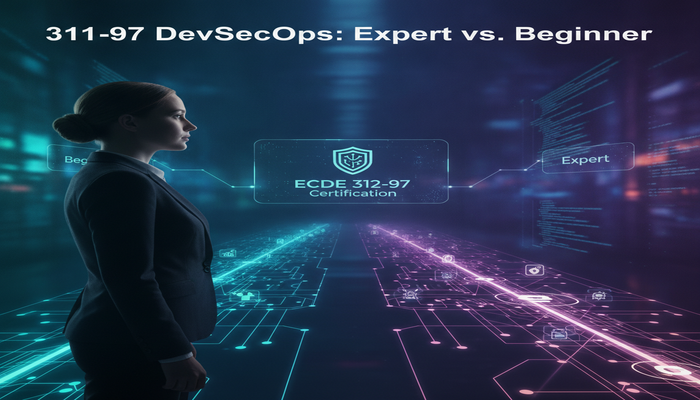
DevSecOps Engineer 312-97 Exam: Expert or Beginner Path

A professional stands at a crossroads, contemplating two illuminated paths labeled 'Beginner' and 'Expert', both converging to an ECDE 312-97 certification hologram, symbolizing the DevSecOps engineer 312-97 exam's suitability for different experience levels amidst a high-tech DevSecOps environment.

In the rapidly evolving landscape of software development, the integration of security practices throughout the entire DevOps pipeline has become not just a best practice, but a critical necessity. This convergence gives rise to DevSecOps, a methodology that embeds security considerations from planning to deployment and monitoring. As organizations increasingly adopt this approach, the demand for skilled DevSecOps engineers is skyrocketing, making certification a valuable asset.

Among the leading credentials is the EC-Council Certified DevSecOps Engineer (ECDE) certification, validated by the 312-97 exam. This certification aims to equip professionals with the knowledge and skills to secure modern software delivery. But a common question arises for many aspiring candidates: Is the DevSecOps engineer 312-97 exam truly for beginners looking to enter the field, or is it exclusively tailored for seasoned experts? This article will delve deep into the ECDE certification, exploring its curriculum, benefits, and the ideal candidate profile to help you determine if it aligns with your career stage and aspirations.

Understanding the DevSecOps Landscape

The digital world thrives on speed and efficiency, driving companies to adopt DevOps principles to accelerate software delivery. However, this pace often unintentionally introduces vulnerabilities if security is not an integral part of the process. DevSecOps addresses this by promoting a "shift-left" security culture, meaning security is considered from the very inception of development, rather than being an afterthought or a bottleneck at the end.

This methodology ensures that security scans, code analysis, vulnerability assessments, and compliance checks are automated and integrated into every stage of the development lifecycle. The goal is not just to fix security issues, but to prevent them from occurring in the first place, leading to more secure, robust, and reliable applications delivered at speed. Professionals with expertise in this domain are in high demand across industries, highlighting the strategic importance of the DevSecOps engineer certification curriculum.

What is the EC-Council Certified DevSecOps Engineer (ECDE) Certification?

The EC-Council Certified DevSecOps Engineer (ECDE) is a credential designed to validate an individual's expertise in integrating security into the DevOps pipeline. As a vendor-neutral certification, it focuses on universal principles and best practices rather than specific tools, making it highly applicable across various technological stacks and organizational environments.

The EC-Council, a globally recognized leader in cybersecurity certification, developed the ECDE v2 program to address the growing need for professionals who can bridge the gap between development, operations, and security teams. The certification covers a broad range of topics, from understanding the core DevOps culture to implementing advanced security controls within CI/CD pipelines. For those seeking detailed insights into the exam's structure and learning objectives, a comprehensive breakdown of the EC-Council Certified DevSecOps Engineer (ECDE) syllabus is an invaluable resource.

Why Choose EC-Council for DevSecOps?

  • Industry Recognition: EC-Council certifications are globally recognized and highly respected within the cybersecurity community.
  • Comprehensive Curriculum: The ECDE curriculum is meticulously designed to cover all critical aspects of DevSecOps, from fundamental concepts to advanced implementation.
  • Practical Focus: The program emphasizes practical skills, preparing candidates for real-world challenges in securing software delivery.
  • Vendor Neutrality: Unlike certifications tied to specific platforms, ECDE focuses on principles and methodologies, ensuring broad applicability.

Who is the ECDE Certification For?

The ECDE certification targets a wide array of IT professionals, including but not limited to:

  • DevOps Engineers
  • Software Developers
  • Security Professionals (Analysts, Engineers, Consultants)
  • Cloud Engineers
  • Architects (Software, Solutions, Security)
  • Quality Assurance Engineers
  • IT Managers and Directors

It is particularly beneficial for those looking to formalize their existing DevSecOps knowledge or pivot their careers towards security-conscious development and operations.

Exam 312-97: The Path to ECDE Certification

The journey to becoming an EC-Council Certified DevSecOps Engineer culminates in successfully passing the 312-97 exam. This assessment rigorously tests a candidate's understanding and application of DevSecOps principles and practices. Understanding the EC-Council 312-97 exam objectives is crucial for effective preparation.

Exam Format and Details:

  • Exam Name: EC-Council Certified DevSecOps Engineer (ECDE)
  • Exam Code: 312-97
  • Exam Price: $550 (USD)
  • Duration: 240 minutes (4 hours)
  • Number of Questions: 100
  • Passing Score: 70%

The multiple-choice questions are designed to assess both theoretical knowledge and practical application, ensuring that certified professionals possess a deep understanding of the subject matter.

Is the 312-97 Exam for Beginners or Experts?

The core question of whether the DevSecOps engineer 312-97 exam is for beginners or experts is nuanced. While EC-Council recommends candidates have a foundational understanding of DevOps, cloud computing, and basic security concepts, the program is structured to accommodate both emerging professionals and seasoned practitioners seeking specialized knowledge.

  • For Beginners: If you have a solid grasp of fundamental IT concepts, a basic understanding of software development lifecycle, and a strong willingness to learn, the ECDE can serve as an excellent entry point into specialized DevSecOps roles. The comprehensive curriculum builds from foundational DevOps culture to advanced security integrations. However, expect a challenging journey requiring dedicated study and potentially supplementary learning on foundational topics.
  • For Experienced Professionals: For developers, operations engineers, or security analysts with prior experience, the ECDE offers an opportunity to formalize existing skills, learn advanced methodologies, and gain a holistic understanding of DevSecOps. It helps bridge knowledge gaps between their specific domains (e.g., development or security) and the integrated DevSecOps model. For experts, it's a path to validate and enhance their strategic role in securing the modern enterprise.

In essence, the ECDE is designed with enough depth to challenge experienced individuals while providing a structured learning path that, with diligence, can be navigated by motivated beginners who have some exposure to IT or development. It is not an entry-level IT certification but rather a specialized credential that benefits from prior IT experience, although it does not strictly require years of dedicated DevSecOps work.

A Deep Dive into the ECDE (312-97) Syllabus

The 312-97 ECDE exam topics are meticulously structured to cover the entire spectrum of DevSecOps, ensuring that candidates gain a holistic understanding of integrating security into every stage of the software delivery pipeline. Let's explore each module in detail, which forms the comprehensive DevSecOps engineer certification curriculum.

Understanding DevOps Culture

This foundational module sets the stage by exploring the core principles and philosophies behind DevOps. It delves into the cultural shift required for successful integration of development and operations, emphasizing collaboration, communication, automation, and continuous improvement. Candidates will learn about the history of DevOps, its evolution, and how it impacts organizational structure and team dynamics. Understanding this cultural context is paramount before integrating security, as DevSecOps is ultimately an extension of the DevOps mindset.

Introduction to DevSecOps

Building upon the DevOps foundation, this section introduces DevSecOps itself. It defines what DevSecOps is, why it's crucial in today's threat landscape, and how it differs from traditional security approaches. Topics include the "shift-left" security paradigm, the benefits of early security integration, and the challenges organizations face in adopting DevSecOps. It covers the common tools, technologies, and methodologies used to embed security throughout the CI/CD pipeline, laying the groundwork for more detailed stages.

DevSecOps Pipeline - Plan Stage

Security begins even before a single line of code is written. This module focuses on integrating security into the planning and design phases. It covers threat modeling, risk assessment, security requirements gathering, and establishing security policies and standards early in the project lifecycle. Candidates learn how to identify potential vulnerabilities at the architectural level, define security non-functional requirements, and ensure compliance with regulatory standards right from the initial conceptualization of a project. This stage is crucial for proactively addressing security concerns rather than reactively fixing them later.

DevSecOps Pipeline - Code Stage

The code stage is where developers write the application's source code. This module emphasizes securing the coding process itself. It covers secure coding practices, static application security testing (SAST), software composition analysis (SCA) to identify vulnerabilities in open-source components, and secrets management. Candidates will learn how to integrate these security tools into their development workflows, enabling automated scanning of code for common vulnerabilities, misconfigurations, and compliance issues as they are being written. Version control security and peer code reviews for security are also discussed.

DevSecOps Pipeline - Build and Test Stage

Once code is written, it's built into executable artifacts and rigorously tested. This module focuses on securing these crucial steps. It covers dynamic application security testing (DAST), interactive application security testing (IAST), penetration testing, and fuzz testing. Candidates will learn how to automate security tests within the CI/CD pipeline, ensuring that every build is scanned for vulnerabilities and that applications behave securely under various conditions. Container security, image scanning, and secure build environments are also vital components of this stage, as are the principles behind effective EC-Council ECDE practice questions for this module.

DevSecOps Pipeline - Release and Deploy Stage

The release and deploy stages are about moving verified applications into production environments. This module focuses on securing the deployment process and the target infrastructure. Topics include secure configuration management, infrastructure as code (IaC) security, immutable infrastructure principles, and secure deployment patterns (e.g., blue/green deployments, canary releases). It also covers secrets management for deployment, secure orchestration, and ensuring that deployment pipelines themselves are resilient against tampering. Hardening production environments and managing access controls are key security best practices for this phase.

DevSecOps Pipeline - Operate and Monitor Stage

Security doesn't end once an application is in production; it's a continuous process. This final module focuses on maintaining security post-deployment. It covers continuous monitoring, logging and alerting strategies, incident response, and security information and event management (SIEM). Candidates will learn about runtime application self-protection (RASP), anomaly detection, and how to effectively respond to and mitigate security incidents in a live environment. Regular vulnerability management, patch management, and continuous compliance checks ensure ongoing security posture. These DevSecOps security best practices 312-97 are essential for long-term operational resilience.

Preparing for the DevSecOps Engineer 312-97 Exam

A structured and disciplined approach is vital for anyone aiming to pass the DevSecOps engineer 312-97 exam. Whether you're a seasoned professional or a dedicated beginner, effective preparation will maximize your chances of success.

Official Training and Courseware

EC-Council strongly recommends enrolling in official training programs and utilizing their authorized courseware. The official Courseware for ECDE v2 provides a comprehensive curriculum, structured lessons, and often includes practical labs that simulate real-world scenarios. This hands-on experience is invaluable for solidifying theoretical knowledge.

Developing a DevSecOps Engineer 312-97 Study Guide

Beyond official training, creating a personalized study guide can be highly effective. This involves:

  • Reviewing Exam Objectives: Go through the EC-Council 312-97 exam objectives meticulously to understand what areas will be covered.
  • Mapping Resources: Link each objective to specific sections in your courseware, recommended books, or online resources.
  • Note-Taking: Summarize key concepts in your own words. Visual aids like diagrams and flowcharts can also be very helpful, especially for understanding pipeline stages.
  • Flashcards: Use flashcards for key terms, tools, and methodologies.

Practice Questions and Labs

Working through EC-Council ECDE practice questions is crucial for familiarizing yourself with the exam format, question types, and time constraints. Look for reputable practice exams that offer detailed explanations for both correct and incorrect answers. Furthermore, hands-on lab experience, whether through official labs or by building your own DevSecOps pipelines in a sandbox environment, will deepen your understanding and build practical skills. This practical application can be the differentiator between understanding a concept and being able to implement it securely.

Community and Networking

Engaging with other professionals preparing for the exam or already certified in DevSecOps can provide valuable insights and support. Online forums, professional groups, and local meetups can be great resources for sharing tips, discussing challenging topics, and even finding study partners.

Time Management and Self-Care

Given the duration of the exam (240 minutes), practicing time management during your studies is essential. Break down your study schedule into manageable chunks, take regular breaks, and ensure you get adequate rest. Burnout can be a significant obstacle, so prioritize your well-being throughout the preparation process.

Benefits of EC-Council Certified DevSecOps Engineer (ECDE) Certification

Obtaining the EC-Council Certified DevSecOps Engineer (ECDE) certification offers a multitude of benefits, solidifying your expertise and enhancing your career prospects in a booming industry.

Enhanced Career Prospects and Salary Potential

Certified DevSecOps Engineers are in high demand. Organizations across all sectors are actively seeking professionals who can embed security into their fast-paced development cycles. This demand translates into competitive salaries and excellent career growth opportunities. According to the U.S. Bureau of Labor Statistics, the median pay for computer and information technology occupations, which includes many roles that could benefit from DevSecOps skills, continues to be strong, indicating a robust job market for skilled professionals. For more insights into the broader tech job market trends, you can explore statistics from the U.S. Bureau of Labor Statistics.

The DevSecOps engineer salary EC-Council certified individuals can command often reflects their specialized skill set, placing them among the higher earners in IT and cybersecurity. The certification can open doors to roles such as DevSecOps Engineer, Security Architect, Cloud Security Engineer, and even lead to more strategic positions like DevSecOps Lead or Manager.

Validation of Expertise

The ECDE certification validates your ability to effectively integrate security into the entire DevOps lifecycle. It demonstrates to employers that you possess a deep understanding of security best practices, automation, and continuous compliance, making you a valuable asset in building resilient and secure applications. This formal recognition distinguishes you from uncertified peers.

Staying Ahead of the Curve

The landscape of cyber threats and software development methodologies is constantly evolving. The ECDE certification ensures that professionals are up-to-date with the latest DevSecOps security best practices 312-97 and emerging technologies. This continuous learning aspect is crucial for maintaining relevance and effectiveness in the field. To understand the ongoing need for modern cybersecurity skills, consider exploring why professionals often join EC-Council's comprehensive training programs.

Contribution to Organizational Security Posture

By implementing DevSecOps principles, certified engineers directly contribute to reducing an organization's attack surface, minimizing vulnerabilities, and improving incident response capabilities. This proactive approach to security helps organizations protect sensitive data, maintain customer trust, and avoid costly breaches.

Who Should Take the ECDE Exam? Navigating the Beginner vs. Expert Path

The EC-Council Certified DevSecOps Engineer (ECDE) certification is designed to be accessible yet challenging, making it suitable for a diverse range of professionals. Understanding whether you fit the beginner or expert profile for this exam is key to successful preparation.

The Beginner with a Foundation

If you're relatively new to the specialized field of DevSecOps but possess a solid foundation in core IT concepts, software development, or operations, the ECDE could be your next logical step. You might be:

  • A junior developer looking to specialize in secure coding.
  • An IT operations professional wanting to integrate security into infrastructure management.
  • A cybersecurity enthusiast aiming to understand application security within continuous delivery pipelines.
  • A recent graduate with a strong computer science or IT security background.

For this group, the certification provides a structured learning path that covers comprehensive DevSecOps engineer certification curriculum from the ground up, assuming a foundational understanding of related fields. It offers an excellent framework to build specialized skills and jumpstart a career in DevSecOps. However, expect to dedicate significant time to mastering the concepts and gaining practical experience.

The Experienced Professional Seeking Specialization

For individuals with several years of experience in development, operations, or traditional cybersecurity, the ECDE is an ideal credential to formalize their existing knowledge and specialize in the burgeoning DevSecOps domain. This group includes:

  • Seasoned DevOps engineers who need to embed robust security practices.
  • Security analysts or architects looking to "shift left" and secure the entire SDLC.
  • Cloud engineers responsible for securing cloud-native applications and infrastructure.
  • Project managers overseeing teams implementing DevSecOps methodologies.

For these professionals, the ECDE offers an opportunity to validate their expertise, fill in knowledge gaps related to integrated security, and position themselves for leadership roles in DevSecOps. It demonstrates a commitment to modern security paradigms and enhances their ability to drive organizational change. The How to pass EC-Council 312-97 exam strategies will differ slightly for this group, focusing more on filling specific knowledge gaps rather than starting from scratch.

Key Considerations for All Candidates

  • Prior Experience: While not strictly required, prior exposure to development methodologies, scripting, cloud platforms, and basic networking/security concepts will significantly ease the learning curve.
  • Commitment to Learning: The ECDE covers extensive ground. Regardless of experience, success demands dedicated study and a commitment to understanding both theoretical principles and practical applications.
  • Hands-on Practice: Theory alone is insufficient. Actively engaging in labs, building small projects, and experimenting with DevSecOps tools are critical for truly grasping the concepts.

Registration and Exam Logistics for the ECDE (312-97) Exam

Once you've decided to pursue the EC-Council Certified DevSecOps Engineer (ECDE) certification, understanding the registration process and exam logistics is your next step. This section provides a practical guide on how to prepare for and register for the 312-97 exam.

312-97 Exam Registration Process

Registering for the ECDE (312-97) exam is a straightforward process, primarily managed through EC-Council's official channels:

  1. Eligibility: Ensure you meet any recommended prerequisites, typically involving prior experience in IT or a related field, though this is often a guideline rather than a strict requirement for exam registration.
  2. Training (Optional but Recommended): Consider enrolling in an official EC-Council training program. While not mandatory for exam registration, it is highly recommended to adequately prepare for the comprehensive exam topics.
  3. Purchase an Exam Voucher: You can purchase an exam voucher directly from EC-Council or an authorized training center. The EC-Council Certified DevSecOps Engineer (ECDE) exam cost is $550 (USD).
  4. Schedule Your Exam: Once you have a voucher, you can schedule your exam through the ECC Exam Center. This platform allows you to choose your preferred testing method (e.g., remote proctored or at a Pearson VUE testing center, depending on availability) and select a convenient date and time.

Exam Preparation Tips

Beyond studying the ECDE syllabus, these practical tips can help ensure a smooth exam experience:

  • Familiarize Yourself with the Testing Environment: If taking a remote proctored exam, ensure your system meets all technical requirements well in advance. Test your webcam, microphone, and internet connection.
  • Review DevSecOps Engineer 312-97 Study Guide Materials: In the days leading up to the exam, review your personalized study guide, notes, and flashcards. Focus on areas where you feel less confident.
  • Practice Time Management: With 100 questions in 240 minutes, you have approximately 2.4 minutes per question. Practice answering questions under timed conditions to improve your pace.
  • Get Ample Rest: A well-rested mind performs best. Ensure you get a good night's sleep before your exam.
  • Read Questions Carefully: Pay close attention to keywords and details in each question to avoid misinterpretations.
  • Manage Your Time During the Exam: If you get stuck on a question, flag it and move on. Return to it later if time permits.

Career Trajectory with ECDE Certification

The EC-Council Certified DevSecOps Engineer (ECDE) certification is not just a badge of honor; it's a launchpad for a dynamic and rewarding career in the intersection of development, security, and operations. The skills validated by the 312-97 exam are highly sought after, offering various career paths and significant growth potential.

Key Roles and Responsibilities

Professionals with ECDE certification are well-suited for a variety of critical roles, including:

  • DevSecOps Engineer: The most direct path, focusing on implementing and managing security controls within CI/CD pipelines.
  • Security Architect: Designing secure application and infrastructure architectures from the ground up, integrating security into the development lifecycle.
  • Cloud Security Engineer: Specializing in securing cloud-native applications, infrastructure, and platforms using DevSecOps principles.
  • Application Security Engineer: Focusing on identifying, preventing, and remediating vulnerabilities in software applications.
  • Automation Engineer: Developing and maintaining automated security tools and workflows within the DevOps pipeline.

These roles often involve a blend of coding, scripting, security analysis, and collaboration, making the ECDE a versatile credential. The best DevSecOps engineer certification training will prepare you for these diverse responsibilities.

Long-term Career Growth

As organizations continue to mature their DevSecOps practices, the demand for experienced and certified professionals will only intensify. With experience, an ECDE certified individual can advance to leadership positions such as:

  • Lead DevSecOps Engineer: Guiding teams in implementing advanced DevSecOps strategies.
  • DevSecOps Manager: Overseeing DevSecOps initiatives, managing budgets, and building high-performing teams.
  • Head of Application Security: Setting the strategic direction for application security across the organization.
  • Chief Information Security Officer (CISO): For those with extensive experience, a strong foundation in DevSecOps can contribute to a CISO's holistic understanding of enterprise security.

The ECDE certification provides the foundational and advanced knowledge necessary to excel in these evolving roles, ensuring long-term career stability and continuous professional development.

Conclusion

The DevSecOps Engineer 312-97 exam and the EC-Council Certified DevSecOps Engineer (ECDE) certification stand as a robust credential in the cybersecurity and software development landscape. It effectively addresses the question of whether it's for beginners or experts by offering a comprehensive curriculum that challenges experienced professionals while providing a clear, albeit intensive, learning path for motivated individuals with foundational IT knowledge.

Ultimately, the ECDE certification is a strategic investment for anyone looking to build or advance a career in modern software security. It validates critical skills in integrating security into every stage of the DevOps pipeline, a capability that is becoming indispensable for organizations worldwide. By demonstrating expertise in DevSecOps, certified professionals not only enhance their individual career prospects but also play a vital role in building a more secure digital future.

If you're ready to elevate your skills and become a pivotal player in securing the next generation of software, consider embarking on the ECDE certification journey. It's a testament to your commitment to excellence in the ever-important domain of DevSecOps. Future-proof your career and gain a competitive edge by earning recognized credentials that affirm your expertise in cybersecurity and secure development practices, like those explored in this article on how EC-Council certifications can secure your future.

Frequently Asked Questions About the EC-Council Certified DevSecOps Engineer (ECDE) 312-97 Exam

1. What is the EC-Council Certified DevSecOps Engineer (ECDE) certification?

The EC-Council Certified DevSecOps Engineer (ECDE) is a credential for professionals who want to integrate security into every phase of the DevOps lifecycle. It validates expertise in securing CI/CD pipelines, automating security controls, and ensuring continuous compliance, demonstrating a comprehensive understanding of DevSecOps principles and practices.

2. What are the prerequisites for taking the DevSecOps engineer 312-97 exam?

EC-Council generally recommends candidates have a foundational understanding of software development, IT operations, cloud computing, and basic cybersecurity concepts. While there are no strict formal prerequisites to register for the exam, prior experience in these areas will greatly assist in understanding the advanced topics covered in the ECDE curriculum.

3. How long should I study for the EC-Council ECDE 312-97 exam?

Study time can vary significantly based on your prior experience. For individuals with some background in DevOps or security, 3-6 months of dedicated study (including official training, self-study, and hands-on labs) might be sufficient. Beginners with less experience may need longer, potentially 6-9 months, to thoroughly grasp all concepts and gain practical skills.

4. What is the passing score for the EC-Council 312-97 exam, and how many questions are there?

The EC-Council Certified DevSecOps Engineer (ECDE) exam (312-97) consists of 100 multiple-choice questions. Candidates have 240 minutes (4 hours) to complete the exam, and a passing score of 70% is required to achieve the certification.

5. What kind of career opportunities can I expect after earning the ECDE certification?

Earning the ECDE certification opens doors to various in-demand roles such as DevSecOps Engineer, Security Architect, Cloud Security Engineer, Application Security Engineer, and Automation Engineer. It also provides a strong foundation for advancing into leadership positions like Lead DevSecOps Engineer or DevSecOps Manager, offering significant career growth and competitive salary potential.

Thursday, 18 June 2026

Avoid the CCT Exam Until You Read This

A thoughtful cybersecurity professional stands at a digital crossroads, contemplating two paths; one clear and guided, the other complex and risky. The image includes the title 'Avoid the CCT Exam Pitfalls' for the 212-82 EC-Council Certified Cybersecurity Technician exam.

Embarking on a career in cybersecurity can feel like navigating a complex maze, especially when confronted with the myriad of certifications designed to validate your skills. Among the many options, the EC-Council Certified Cybersecurity Technician (CCT) certification stands out as a promising entry-point for aspiring professionals. However, before you commit your time and resources to the explore the advantages of EC-Council's training ecosystem and the CCT cybersecurity technician exam, it's crucial to understand exactly what it entails, who it's for, and how to maximize your preparation. This comprehensive guide is designed to provide you with an objective, helpful, and comparative overview, ensuring you make an informed decision about pursuing the EC-Council CCT certification.

The cybersecurity landscape is constantly evolving, demanding a workforce equipped with foundational technical skills. The EC-Council CCT is specifically tailored to meet this demand, focusing on practical knowledge that prepares individuals for real-world scenarios. But is it the right choice for *you* at this moment in your career? Let's delve deep into the EC-Council CCT exam syllabus, potential career paths, preparation strategies, and everything else you need to know to avoid common pitfalls and succeed.

What is the EC-Council Certified Cybersecurity Technician (CCT) Certification?

The EC-Council Certified Cybersecurity Technician (CCT) is a foundational certification designed by EC-Council, a global leader in cybersecurity education and training. It aims to equip individuals with the essential knowledge and practical skills required to establish, maintain, and protect IT infrastructure. The certification focuses on core cybersecurity principles and hands-on techniques, making it an ideal starting point for those new to the field or IT professionals looking to transition into a cybersecurity role.

Target Audience for the CCT Certification

The CCT is primarily geared towards entry-level cybersecurity professionals, network administrators, IT support specialists, and anyone aspiring to a technical cybersecurity role. It serves as a stepping stone, providing a solid understanding of various cybersecurity domains before specializing in advanced areas. If you're looking for an EC-Council CCT certification for beginners that offers a broad yet deep dive into technician-level cybersecurity tasks, this certification is certainly worth considering.

Key Focus Areas of the CCT

Unlike some certifications that might focus narrowly on a specific vendor or technology, the EC-Council CCT is designed to be vendor-neutral, providing a holistic view of cybersecurity. It covers a wide array of topics from network security fundamentals to incident response and even emerging areas like IoT security. This broad scope ensures that certified individuals possess a versatile skill set applicable across various organizational environments.

Is the EC-Council CCT Exam Right for You?

Deciding whether to pursue the EC-Council CCT certification involves assessing your career aspirations, current skill level, and long-term goals. This certification is an excellent choice for those who are committed to building a hands-on, technical career in cybersecurity and want to validate their foundational skills with an industry-recognized credential.

Ideal Candidates and Career Paths

The EC-Council CCT certification is particularly beneficial for individuals eyeing roles such as:

  • Cybersecurity Technician
  • Network Security Administrator
  • Security Analyst (Entry-Level)
  • IT Support Engineer with Security Focus
  • Security Operations Center (SOC) Analyst Tier 1

These roles typically involve monitoring security systems, performing basic vulnerability assessments, responding to security incidents, and implementing security controls. The EC-Council CCT certification career path often leads to more advanced roles like ethical hacker, penetration tester, or security engineer as you gain experience and pursue further certifications.

Benefits in the Current Job Market

In today's digital age, organizations across all sectors face persistent cyber threats. This creates a high demand for skilled cybersecurity professionals. The CCT certification helps you stand out in a competitive job market by demonstrating your foundational knowledge and practical abilities. According to the U.S. Bureau of Labor Statistics, employment of information security analysts is projected to grow 32 percent from 2022 to 2032, much faster than the average for all occupations. This translates to about 16,800 openings each year, on average, for information security analysts over the decade. Many of these roles require or benefit from certifications like the CCT, which provide a solid entry point into this growing field. For more insights into career opportunities, you can explore the occupational outlook for computer and information technology professionals.

Is EC-Council CCT Certification Worth It?

For many, the question of "is EC-Council CCT certification worth it?" boils down to return on investment. Given the projected growth in cybersecurity jobs and the CCT's focus on practical, in-demand skills, the answer is often yes. It provides a structured learning path, validates your expertise, and opens doors to entry-level positions that can lead to lucrative and fulfilling careers. It's an investment in your future, providing the initial credentials needed to build a robust cybersecurity career.

Understanding the EC-Council CCT Exam (212-82)

To successfully navigate the EC-Council CCT exam, it's vital to have a clear understanding of its structure, format, and administrative details. Knowing what to expect can significantly reduce test anxiety and help you focus your preparation effectively. The exam code for the CCT cybersecurity technician exam is 212-82.

Exam Details and Logistics

The EC-Council Certified Cybersecurity Technician (CCT) exam (212-82) assesses a candidate's competency across various cybersecurity domains. Here's a breakdown of the key administrative details:

  • Exam Name: EC-Council Certified Cybersecurity Technician (CCT)
  • Exam Code: 212-82
  • Exam Price: $499 (USD)
  • Duration: 180 minutes
  • Number of Questions: 60 multiple-choice questions
  • Passing Score: The EC-Council 212-82 exam passing score varies between 60-85% depending on the exam version, as EC-Council uses a psychometric approach for scoring.

Understanding the EC-Council CCT exam cost and passing score is crucial for budgeting and setting realistic expectations. The duration allows for ample time to review questions, but effective time management is still key to completing all 60 questions thoroughly.

What to Expect on Exam Day

The exam is typically administered through EC-Council's authorized testing centers or via their remote proctoring service. Regardless of the method, you'll need to adhere to strict identification and environmental rules. The 60 multiple-choice questions will cover the breadth of the EC-Council CCT exam syllabus, requiring both theoretical knowledge and an understanding of practical application. Before scheduling, it's a good idea to thoroughly review the EC-Council CCT exam syllabus to ensure you're familiar with all the topics.

Deep Dive into the EC-Council CCT Exam Syllabus

The core of your preparation for the CCT cybersecurity technician exam lies in mastering the EC-Council CCT exam syllabus. This section provides a detailed breakdown of the EC-Council Certified Cybersecurity Technician exam topics, giving you a clear roadmap for your study plan. Understanding the 212-82 CCT exam content outline is essential for effective preparation.

Core Domains and Their Importance

The EC-Council CCT certification exam domains are comprehensive, covering a broad spectrum of cybersecurity knowledge. Here's what is covered in the EC-Council CCT exam:

Information Security Threats and Vulnerabilities

This module introduces the fundamental concepts of information security, including common threats, vulnerabilities, and attacks that plague modern systems. You'll learn about different types of malware, social engineering tactics, and the various ways systems can be exploited. Understanding these foundational elements is crucial for any cybersecurity professional, as it forms the basis for identifying and mitigating risks.

Information Security Attacks

Building on threats and vulnerabilities, this section delves into the mechanics of various information security attacks. It covers a wide range of attack vectors, including denial-of-service (DoS/DDoS) attacks, buffer overflows, SQL injection, cross-site scripting (XSS), and phishing. Candidates learn to identify the characteristics of these attacks and understand their potential impact on systems and data.

Network Security Fundamentals

A strong grasp of network security is indispensable for a cybersecurity technician. This module covers network architecture, topologies, protocols (TCP/IP, DNS, DHCP), and common network devices like routers, switches, and firewalls. It emphasizes understanding how these components interact and how they can be secured. This foundational knowledge is key to troubleshooting and securing network environments.

Identification, Authentication, and Authorization

This critical domain explores the principles and mechanisms used to verify user identities and control access to resources. Topics include multifactor authentication (MFA), biometrics, password policies, access control models (e.g., DAC, MAC, RBAC), and identity and access management (IAM) systems. Proper implementation of IAAA is fundamental to preventing unauthorized access.

Network Security Controls - Administrative Controls

Administrative controls are the policies, procedures, and guidelines that dictate how security is managed within an organization. This module covers security awareness training, incident response policies, disaster recovery plans, and acceptable use policies. Understanding these non-technical controls is vital for building a holistic security posture.

Network Security Controls - Physical Controls

Physical security is often overlooked but is a crucial layer of defense. This section addresses controls designed to protect physical access to IT assets, such as surveillance systems, access cards, locks, environmental controls (temperature, humidity), and fire suppression systems. Candidates learn the importance of securing the physical perimeter to prevent unauthorized access and environmental damage.

Network Security Controls - Technical Controls

Technical controls are implemented through hardware and software. This module covers firewalls (packet filtering, stateful inspection), intrusion detection/prevention systems (IDS/IPS), virtual private networks (VPNs), antivirus software, and security information and event management (SIEM) systems. Mastering these technical safeguards is central to a cybersecurity technician's role.

Network Security Assessment Techniques and Tools

This domain introduces methods and tools used to evaluate the security posture of networks. It covers vulnerability scanning, penetration testing methodologies, security audits, and various command-line tools for network analysis and scanning. Practical knowledge of these techniques helps identify weaknesses before attackers can exploit them.

Application Security

Securing applications is paramount, as they are frequent targets for attackers. This module discusses common application vulnerabilities (e.g., OWASP Top 10), secure coding practices, web application firewalls (WAFs), and secure software development lifecycles (SDLC). Understanding application security helps prevent attacks that originate from software flaws.

Virtualization and Cloud Computing

With the widespread adoption of virtualization and cloud services (IaaS, PaaS, SaaS), securing these environments has become critical. This section covers security considerations specific to virtual machines, hypervisors, cloud deployment models, shared responsibility models, and common cloud security threats. It highlights how traditional security principles apply in virtualized and cloud contexts.

Wireless Network Security

Wireless networks introduce unique security challenges. This module explores different wireless standards (Wi-Fi, Bluetooth), common wireless vulnerabilities (e.g., WEP cracking), and security protocols like WPA2/WPA3. Candidates learn how to configure and secure wireless networks effectively to prevent unauthorized access and data interception.

Mobile Device Security

The proliferation of mobile devices necessitates robust mobile security strategies. This domain covers mobile operating system security (iOS, Android), mobile device management (MDM) solutions, BYOD (Bring Your Own Device) policies, and common mobile threats like malware and data leakage. Securing mobile endpoints is crucial in today's mobile-centric world.

IoT and OT Security

The Internet of Things (IoT) and Operational Technology (OT) environments present distinct security challenges due to their unique architectures and critical functions. This module introduces concepts related to securing smart devices, industrial control systems (ICS), SCADA systems, and addressing their specific vulnerabilities and attack surfaces. This is an increasingly vital area of cybersecurity.

Cryptography

Cryptography is the backbone of secure communication and data protection. This section covers cryptographic principles, algorithms (symmetric and asymmetric), hashing functions, digital signatures, and Public Key Infrastructure (PKI). Understanding cryptography is essential for implementing secure communication channels and ensuring data integrity and confidentiality.

Data Security

Protecting sensitive data is a primary goal of cybersecurity. This module discusses data classification, data loss prevention (DLP), data encryption at rest and in transit, data backup and recovery strategies, and regulatory compliance requirements (e.g., GDPR, HIPAA). Effective data security measures are crucial for protecting an organization's most valuable assets.

Network Troubleshooting

A cybersecurity technician must also possess strong network troubleshooting skills to diagnose and resolve connectivity and performance issues. This module covers common network troubleshooting tools and methodologies, including command-line utilities (ping, tracert, ipconfig), packet sniffers, and systematic approaches to problem-solving. These skills are vital for maintaining network health and security.

Network Traffic Monitoring

Monitoring network traffic is key to detecting suspicious activities and potential threats. This domain covers the use of network monitoring tools, packet analysis, flow data (NetFlow, sFlow), and understanding common traffic patterns. Effective monitoring allows for early detection of anomalies and potential security breaches.

Network Logs Monitoring and Analysis

Security logs provide invaluable insights into system and network activities. This module teaches how to collect, store, monitor, and analyze various types of logs (system logs, application logs, security logs). It covers the importance of log management, correlation of events, and identifying indicators of compromise (IOCs) through log analysis.

Incident Response

When a security incident occurs, a swift and organized response is critical. This section covers the incident response lifecycle: preparation, identification, containment, eradication, recovery, and lessons learned. Candidates learn the procedures and best practices for effectively handling security breaches to minimize damage and restore normal operations.

Computer Forensics

Computer forensics involves the collection, preservation, analysis, and presentation of digital evidence. This module introduces forensic methodologies, tools, and legal considerations for investigating cybercrimes. Understanding forensic principles is important for incident response and legal proceedings following a security breach.

Business Continuity and Disaster Recovery

Ensuring that critical business functions can continue during and after a disruptive event is vital. This domain covers business continuity planning (BCP) and disaster recovery planning (DRP), including risk assessment, business impact analysis, recovery strategies, and testing plans. These plans minimize downtime and ensure organizational resilience.

Risk Management

Risk management is the process of identifying, assessing, and mitigating risks to an organization's assets. This module covers risk assessment methodologies, qualitative and quantitative risk analysis, risk treatment strategies (avoidance, transfer, mitigation, acceptance), and compliance frameworks. A solid understanding of risk management helps organizations make informed security decisions.

Preparing for the EC-Council CCT Exam: Resources and Strategies

Effective preparation is the cornerstone of success for any certification exam, and the CCT cybersecurity technician exam is no exception. This section provides an EC-Council CCT exam study guide, outlining how to prepare for EC-Council CCT exam using the best resources and strategies.

Official EC-Council Training and Courseware

EC-Council offers official training programs designed specifically for the CCT certification. These programs are delivered by certified instructors and provide in-depth coverage of all exam objectives. Coupled with the training, the official EC-Council CCT e-courseware is an invaluable resource. This comprehensive material covers every topic in detail, often including labs and practical exercises to reinforce learning. You can find the official CCT e-courseware directly from the EC-Council store.

Engaging in EC-Council Certified Cybersecurity Technician training ensures that you are learning from the most accurate and up-to-date content, directly aligned with the exam's requirements. These resources are designed to provide both theoretical understanding and practical application, which is critical given the hands-on nature of a technician role.

Supplementary Study Resources

While official materials are paramount, supplementing your study with other resources can enhance your understanding and retention. Consider:

  • Online Study Groups and Forums: Engaging with other students can provide different perspectives, clarify doubts, and offer motivation.
  • Video Tutorials: Platforms like YouTube or dedicated training sites often have videos explaining complex concepts in an easily digestible format.
  • Books and Guides: While the official courseware is comprehensive, sometimes a different explanation or perspective from a renowned author can deepen your understanding.

When searching for the best resources for EC-Council CCT exam prep, prioritize those that are well-regarded, up-to-date, and align with the official syllabus.

Practice Exams and Hands-On Labs

One of the most effective ways to prepare for the CCT cybersecurity technician exam is through practice. Utilizing EC-Council CCT practice exam questions can help you familiarize yourself with the exam format, question types, and time constraints. Practice exams not only test your knowledge but also help identify areas where you need further study.

Furthermore, given the practical nature of the CCT role, hands-on labs are crucial. The EC-Council CCT program often integrates lab exercises that allow you to apply theoretical knowledge to real-world scenarios, using actual tools and technologies. This practical experience is invaluable for solidifying your skills and building confidence. It's not enough to just know the concepts; you must be able to apply them. These practical elements are what truly differentiate the CCT certification and prepare you for day-to-day tasks.

Study Strategies for Success

To maximize your chances of passing the 212-82 CCT exam:

  1. Create a Study Schedule: Allocate dedicated time each day or week for studying, ensuring consistent progress.
  2. Master the Syllabus: Go through each domain of the EC-Council CCT exam syllabus thoroughly. Don't skip topics, even if they seem less exciting.
  3. Focus on Practical Application: Connect theoretical concepts to how they would be applied in a real cybersecurity environment.
  4. Review Weak Areas: Use practice exams to pinpoint your weaknesses and dedicate extra study time to those specific topics.
  5. Take Breaks: Avoid burnout by incorporating regular breaks into your study routine.
  6. Stay Updated: Cybersecurity is a fast-paced field. Keep an eye on current threats and technologies, as this context can deepen your understanding.

Benefits of EC-Council CCT Certification

Beyond simply passing an exam, earning the EC-Council CCT certification offers a multitude of tangible benefits that can significantly impact your career trajectory and professional development. These benefits extend from immediate career opportunities to long-term professional growth and recognition.

Skill Validation and Industry Recognition

The EC-Council CCT certification serves as an official validation of your foundational cybersecurity technical skills. It demonstrates to potential employers that you possess a recognized level of competence in key areas such as network security, incident response, and threat identification. EC-Council is a well-respected name in the cybersecurity industry, and their certifications carry significant weight globally. Holding the CCT credential immediately enhances your professional credibility and signals your commitment to the field.

Enhanced Career Opportunities and Advancement

For those looking to enter the cybersecurity domain, the CCT opens doors to entry-level technician roles that might otherwise be inaccessible without formal credentials. For existing IT professionals, it provides a structured pathway to transition into more specialized cybersecurity positions. The skills acquired during your EC-Council Certified Cybersecurity Technician training are highly sought after, making you a more attractive candidate for employers. As you gain experience, the CCT serves as a robust foundation for pursuing more advanced certifications and moving into leadership or specialized roles. This certification offers clear benefits of EC-Council CCT certification for career progression.

Foundation for Advanced Cybersecurity Certifications

The CCT is intentionally designed as a foundational certification. It provides a broad overview of essential cybersecurity concepts and practices, making it an excellent prerequisite for more advanced EC-Council certifications, such as the Certified Ethical Hacker (CEH) or Certified Network Defender (CND). It builds the necessary knowledge base that subsequent, more specialized certifications will expand upon, ensuring a cohesive and progressive learning journey. This strategic placement within EC-Council's certification roadmap makes the CCT a smart initial investment for long-term career planning. You can learn more about the broader offerings and advantages of this certification on the official EC-Council Certified Cybersecurity Technician page.

Practical, Hands-On Skills

One of the standout benefits of the EC-Council CCT is its strong emphasis on practical, hands-on skills. The certification curriculum isn't just about theoretical knowledge; it's about applying that knowledge to real-world scenarios. This ensures that CCT-certified professionals are not only knowledgeable but also capable of performing essential cybersecurity tasks, such as configuring security devices, analyzing network traffic, and assisting in incident response. This practical aptitude makes CCT holders valuable assets from day one.

Real-World Application: What a CCT Does

Understanding the theoretical framework of the EC-Council CCT exam syllabus is one thing, but envisioning how those skills translate into daily job responsibilities is another. The EC-Council Certified Cybersecurity Technician (CCT) is designed to produce professionals who can immediately contribute to an organization's security posture, performing a range of vital tasks.

Daily Responsibilities of a CCT

A CCT-certified professional typically works in an operational role within an IT or security department. Their daily tasks might include:

  • Monitoring Security Systems: Regularly checking security information and event management (SIEM) systems, intrusion detection/prevention systems (IDS/IPS), and firewalls for alerts and anomalies.
  • Incident Support: Assisting in the initial phases of incident response, such as identifying the scope of a security incident, basic containment actions, and documenting observations for higher-tier analysts.
  • Vulnerability Management: Performing basic vulnerability scans, identifying common vulnerabilities, and assisting in the remediation process.
  • Network Security Configuration: Implementing and maintaining security configurations for network devices like routers, switches, and firewalls under supervision.
  • Security Policy Enforcement: Ensuring compliance with organizational security policies and procedures, and assisting in security awareness training.
  • Log Analysis: Reviewing system and network logs to detect suspicious activities or troubleshoot security-related issues.
  • Data Protection: Implementing and monitoring data backup procedures and basic data encryption for sensitive information.

These responsibilities highlight the hands-on and proactive nature of the EC-Council Certified Cybersecurity Technician job roles, emphasizing prevention, detection, and initial response.

Bridging Theory and Practice

The CCT curriculum excels at bridging the gap between theoretical knowledge and practical application. For instance, learning about different types of network attacks (covered in 'Information Security Attacks') is immediately followed by understanding how to implement technical controls (covered in 'Network Security Controls - Technical Controls') to mitigate those attacks, and then how to monitor for them (in 'Network Traffic Monitoring' and 'Network Logs Monitoring and Analysis'). This integrated approach ensures that CCTs don't just memorize facts but genuinely understand how to apply their knowledge in a dynamic environment.

The ability to troubleshoot network issues, analyze traffic, and respond to incidents makes CCTs valuable members of any security team. They possess the foundational skills to understand the technical intricacies of cybersecurity challenges and contribute effectively to an organization's defense strategy. This practical grounding is what makes the EC-Council CCT certification a strong starting point for a career in cybersecurity.

Conclusion

Deciding to pursue the EC-Council Certified Cybersecurity Technician (CCT) certification is a significant step towards a rewarding career in cybersecurity. As we've explored, the CCT cybersecurity technician exam (212-82) offers a comprehensive and practical foundation, covering a wide array of essential topics from network security and incident response to cryptography and risk management. It's an investment that can validate your skills, open doors to numerous job opportunities, and lay the groundwork for advanced certifications.

Before you commit, it's vital to ensure your aspirations align with what the CCT offers. If you are an aspiring entry-level cybersecurity professional, an IT technician looking to specialize, or someone who thrives on hands-on technical challenges, then the EC-Council CCT is undoubtedly a certification worth considering. Leverage the official EC-Council CCT exam study guide, practice with mock exams, and immerse yourself in the practical labs to truly master the content.

The cybersecurity field is constantly expanding, creating a continuous demand for skilled technicians. By earning your CCT, you're not just getting a piece of paper; you're acquiring a versatile skill set that will make you an invaluable asset in protecting digital assets. Are you ready to take the next step and strategies to future-proof your cybersecurity career? Begin your preparation today and take the first stride towards a secure and prosperous future in cybersecurity. When you're ready, you can schedule your exam through the ECC Exam Center.

Frequently Asked Questions About the EC-Council CCT Exam

1. What is the primary focus of the EC-Council CCT certification?

The EC-Council CCT certification primarily focuses on providing foundational, hands-on technical skills required for entry-level cybersecurity roles. It covers core areas like network security, threat identification, incident response, and security controls, preparing individuals for practical, operational tasks in cybersecurity.

2. How does the CCT exam differ from other entry-level cybersecurity certifications?

The EC-Council CCT emphasizes a broad, vendor-neutral understanding of cybersecurity principles combined with a strong focus on practical application through its comprehensive syllabus. While other certifications might specialize, the CCT aims to provide a well-rounded technical foundation for a cybersecurity technician role, including emerging areas like IoT and OT security.

3. What job roles can I pursue after achieving the EC-Council CCT certification?

With the EC-Council CCT certification, you can pursue entry-level job roles such as Cybersecurity Technician, Network Security Administrator, Entry-Level Security Analyst, IT Support Engineer with a security focus, or a Tier 1 Security Operations Center (SOC) Analyst.

4. What are the recommended study materials for the EC-Council CCT exam (212-82)?

The most recommended study materials include the official EC-Council CCT e-courseware and instructor-led training. Supplementing these with practice exams, hands-on labs, and online study groups can significantly enhance your preparation and understanding of the EC-Council CCT exam syllabus.

5. Is the EC-Council CCT certification suitable for someone with no prior IT experience?

While some basic IT knowledge (e.g., networking fundamentals) is beneficial, the EC-Council CCT certification is designed to be accessible to beginners. It provides a structured learning path from foundational concepts, making it an excellent starting point for individuals looking to enter the cybersecurity field with limited or no prior dedicated security experience.